
Stoic Detachment from Loved Ones – Epictetus on True Love
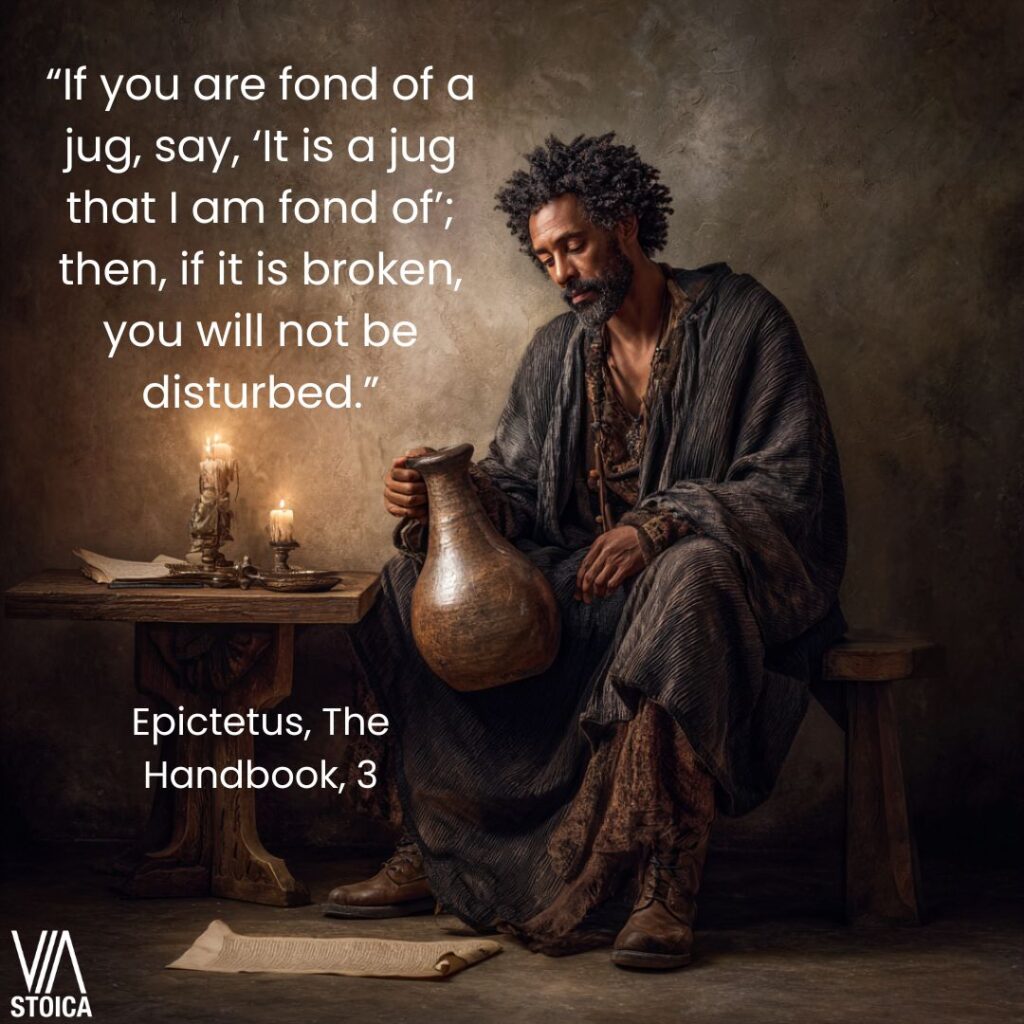
“In the case of everything that delights the mind, or is useful, or is loved with fond affection, remember to tell yourself what sort of thing it is, beginning with the least of things. If you are fond of a jug, say, ‘It is a jug that I am fond of’; then, if it is broken, you will not be disturbed. If you kiss your child, or your wife, say to yourself that it is a human being that you are kissing; and then you will not be disturbed if either of them dies.”
Epictetus, The Handbook, 3
We often think detachment means distance and coldness. But for the Stoics, especially Epictetus, detachment is a form of deep wisdom, an awareness of impermanence that sharpens our presence and increases our attention to what is around us. It is a practice in mindfulness and gratitude due to the reminder that everything is on loan.
Why Stoic detachment from loved ones is not heartless
At first glance, Epictetus’ advice seems harsh. How can one say, “It is a human being I am kissing,” without sounding detached in the wrong way? But this is not about withdrawing love, it’s about increasing it when it matters, in the moment.
Loved ones, like all things in life, are mortal. To pretend otherwise is to build our emotional life on a foundation of sand. Stoic detachment from loved ones means recognizing their nature as human beings, fragile, temporary, and outside our ultimate control.
By doing so, we do not love them less. We love them with more presence, more clarity, more peace. We stop clinging and start appreciating. Make sure you don’t take the people that are important to you for granted, but cherish them being in your life. The same idea goes for things that are dear to you. They are here now, don’t keep looking at the next object waiting for you, be grateful for what you have.
Practical reflections
- Name the thing honestly: Whether it’s a person or an object, remind yourself what it actually is. “I love this jug,” becomes “It is a jug I love.” This reduces false expectations.
- Prepare the mind: The Stoics practiced premeditatio malorum, imagining loss not to dwell in fear but to strengthen emotional resilience and appreciation for the present.
- Love consciously: When you kiss your partner or child, say to yourself, “This is a human being, not mine to possess.” This is the heart of Stoic detachment from loved ones, without fear of loss yet full of love.
FAQ Section
What is Stoic detachment in relationships?
Stoic detachment is not emotional numbness. It is the ability to love deeply in the present while understanding that others are outside your control and are mortal.
Is it un-Stoic to grieve a loss?
No. Grief is natural, but Stoicism teaches us not to be ruled by it. We can feel sorrow without losing reason or stability.
How can I love someone deeply without attachment?
By embracing the Stoic view that true love is unconditional, non-possessive, and anchored in present awareness, not fear of losing.
Want to explore more Stoic strategies?
Book a free consultation with one of our Stoic Coaches or read more on the Epictetus Quotes page. You can also listen to the Via Stoica podcast on Spotify or Apple Podcasts or watch it on YouTube.
Author Bio
Benny Voncken is the co-founder of Via Stoica, where he helps people apply Stoic philosophy to modern life. He is a Stoic coach, writer, and podcast host of The Via Stoica Podcast. With almost a decade of teaching experience and daily Stoic practice, Benny creates resources, workshops, and reflections that make ancient wisdom practical today.



Comments 0