
The Inner Citadel by Pierre Hadot
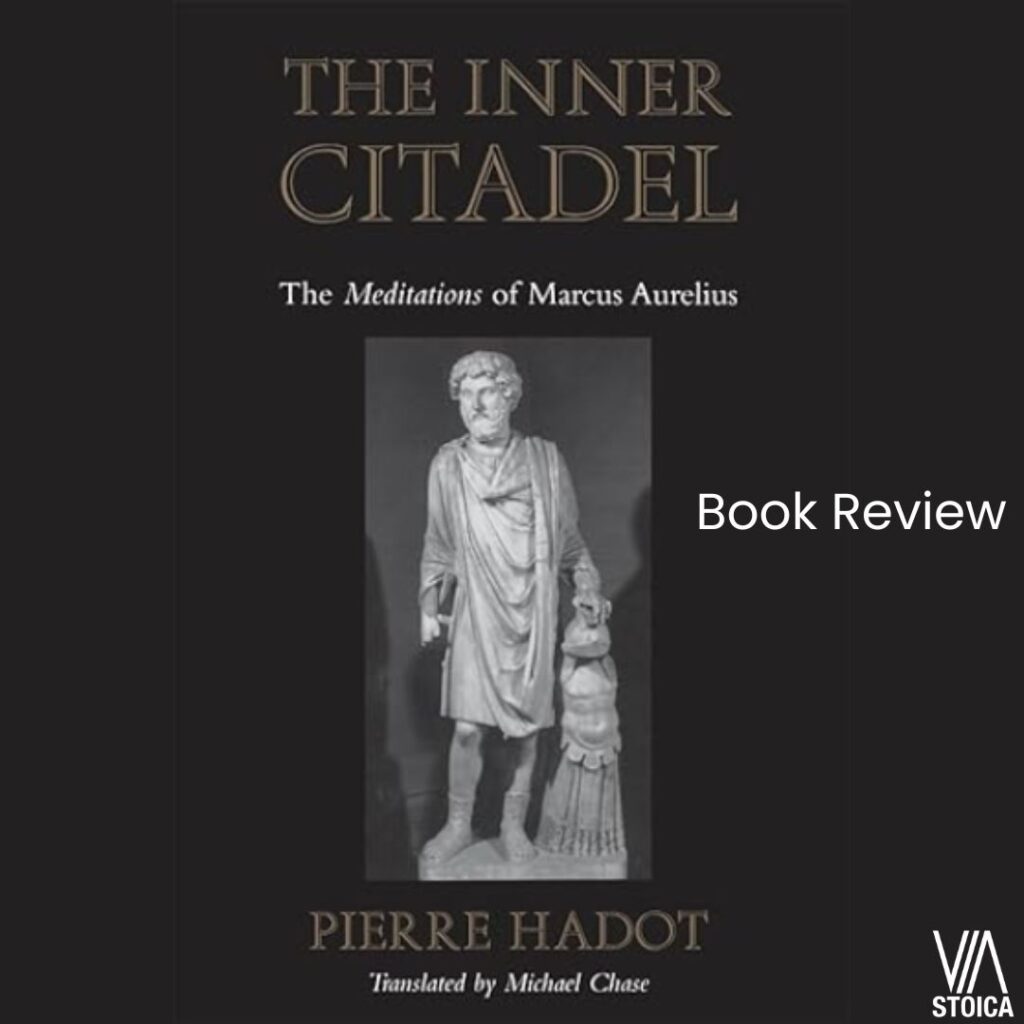
The Inner Citadel by Pierre Hadot is a profound examination of the life, the mind, and the philosophy of Marcus Aurelius and his personal notes, the Meditations.
Summary
Hadot begins with a short biography of Marcus Aurelius, showing how a young Roman grew into the Emperor of Rome. He introduces Marcus’ upbringing, family life, and the teachers who shaped him, and explains how he came to Stoic philosophy. The book also explores the history, meaning, and possible transmission of the Meditations. All of this provides the foundation needed to dive into the mind of the philosopher-king.
From there, Hadot turns to philosophy. He examines Marcus’ relationship with his greatest influence, Epictetus, even though they never met. By doing so, the reader gains insight not only into Marcus’ thinking, but also into the Stoicism of Epictetus.
The core of the book is a deep exploration of the three Stoic disciplines as practiced by both Marcus and Epictetus: the discipline of desire, the discipline of assent, and the discipline of action. These recurring themes throughout the Meditations offer structure for anyone wanting to practice Stoicism today, just as they did for Marcus. The book ends with a reflection on virtue, joy, and how much of Marcus Aurelius truly appears on the page.
Review
The Inner Citadel is essential reading for anyone serious about studying and applying Stoic philosophy. It offers rich context and insight into what makes the Meditations so special, helping readers uncover the wisdom behind Marcus’ short, almost poetic reflections.
Hadot’s use of extracts from Marcus’ notes strengthens the case for Stoic practice. His recognition of the three recurring themes and the way he highlights them is where the book truly stands out. It sets a high bar for any other work on the Meditations. At the same time, this depth can make it a more challenging read, so it may not be the best first step for beginners. In that case, How to Think Like a Roman Emperor by Donald Robertson is a good place to start.
Recommendation
Whether you have read the Meditations before, which I recommend, or are encountering Marcus Aurelius for the first time, The Inner Citadel gives a clear and rewarding overview of what Stoic philosophy is all about. It will likely inspire you to return to the emperor’s notes with a renewed perspective.
This blend of philosophy, practice, and interpretation is valuable both for academic readers and for those applying Stoicism in daily life. It deserves a place in any Stoic library.
Final Thoughts
As one of my favorite Stoic books, I cannot recommend it highly enough. It does require some basic understanding of Stoicism to appreciate its full depth, but the reward is well worth it. You will see Marcus Aurelius differently after reading this book.
Want to explore more Stoic practices?
Book a free consultation with one of our Stoic Coaches to get support. Or read Stoic Book Reviews here. Listen to the Via Stoica Podcast on Spotify, Apple Podcasts, or YouTube.
Author Bio
Benny Voncken is the founder of Via Stoica and host of The Via Stoica Podcast. He has practiced Stoicism as a way of life for over seven years and draws on almost 15 years of teaching experience to turn dense ancient ideas into daily practice. Since 2023 he has coached clients around the world through one-on-one Stoic coaching. He also leads Stoic walks across Europe, writes the monthly newsletter The Pause, and has spoken at Stoicon.
Related Posts
-
 Musonius Rufus Lectures
Musonius Rufus Lecture 1: How to Teach Like a Stoic
Musonius Rufus Lecture 1 explains how to teach like a Stoic: a few convincing proofs, a student who tests them, and a teacher who lives them.
Read more -
-


Comments 0