
How Our Mirror Fails to Reflect
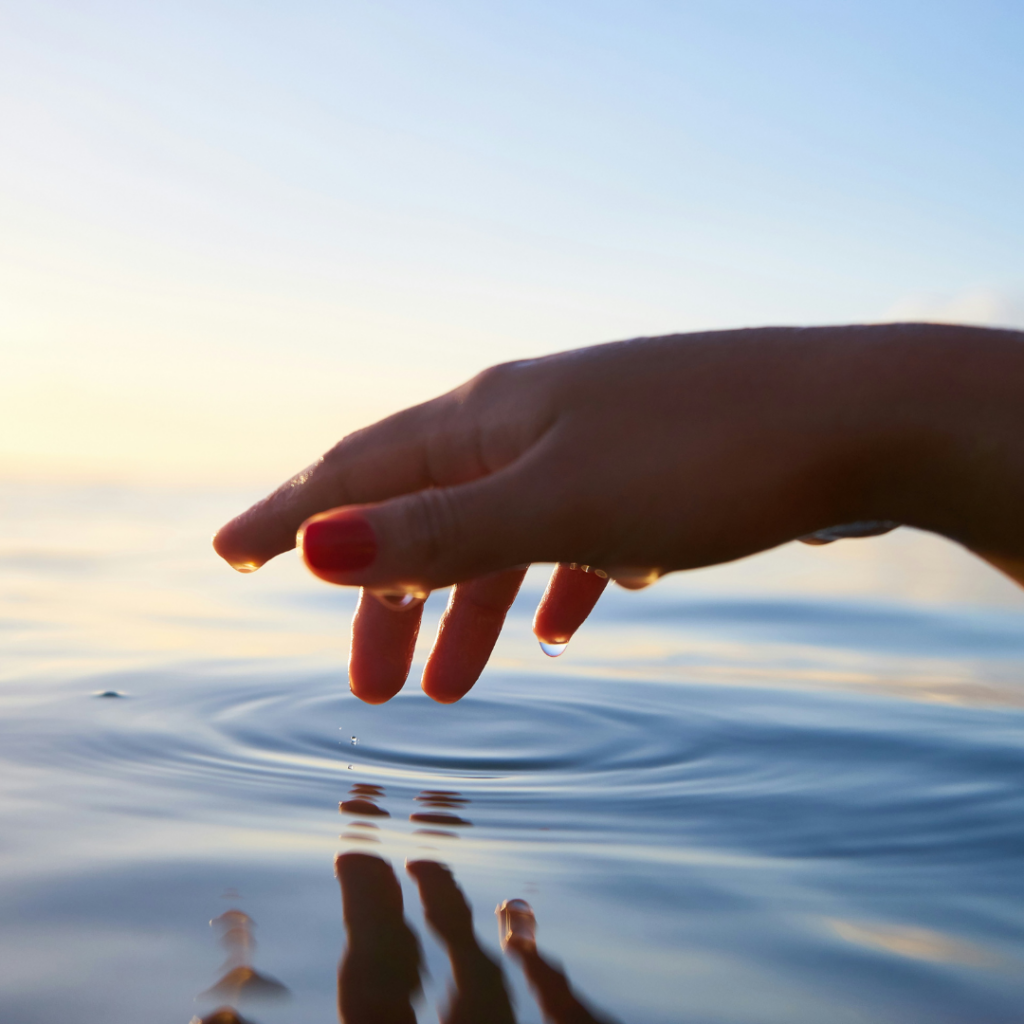
Our mirror fails to reflect more than we realize. That’s not because the mirror is broken, but because we don’t treat it the way we should. This is a pivotal concept for me, that is why I called these posts reflections. It wasn’t something I used to do before, to reflect. This prevented me from learning from what was happening around me and I kept on judging others. My mirror showed me what the world wanted me to see, instead of what I needed to see; myself. Once I learned that my focus should’ve been on me, my life changed in a big way.
In the book by Shannon Lee, Be Water, My Friend, we can find Bruce Lee’s words on this topic. He discussed The Sparring Partner and the relationship with people around you. I’d like to expand that to our relationship with the world.
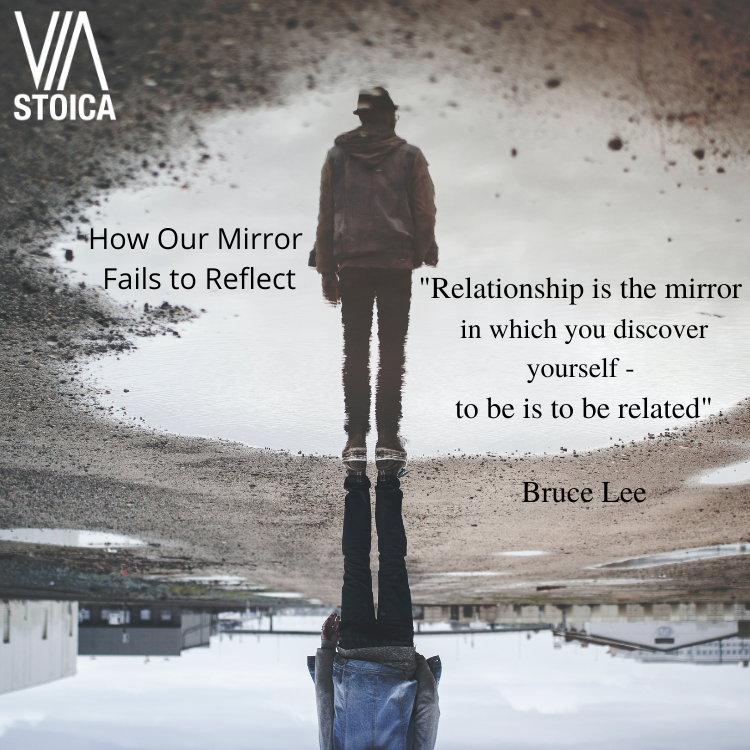
“Relationship is a process of self-revelation. Relationship is the mirror in which you discover yourself – to be is to be related.”
Bruce Lee, Be Water, My Friend, chapter 4
The mirror is found everywhere
Together, we will acknowledge our mirror, put it into focus, and find our reflection. If we manage to do that, we can take our first steps to a more peaceful and happy life. If we learn to embrace our mirror, we can embrace ourselves. This leads to living a virtuous life because there is no need to hide anymore. But what is this mirror?
The mirror is found everywhere. In the people we encounter, the world around us, and in the entire universe. The energy we send out is what we get back. As I was walking my sister’s dog earlier today, I realized that something was off. She wasn’t acting any different, yet the walk didn’t feel like the day before. One day earlier, I was running with her and throwing a stick. It was an enjoyable walk, and I was taking in all the surroundings. Today, that mood was gone. She wanted to run and do all the things she did the day before. Yet I wasn’t feeling it, and so to me, the dog wasn’t behaving normally. Then I realized this wasn’t the dog’s fault; it was mine.
Your mind must be open to it

We can find examples of these reflections all around us. If we see someone jumping in a queue, we can become annoyed by it. That’s because to us, this is not proper behavior. And is it also bad if we do it ourselves? If the other drivers on the road appear to be too chaotic or slow. What does that say about our mood? How does the world look when you’re calm or happy? Doesn’t it shine a lot more than? These are some examples of the reflection we can receive from the world. If used properly, they can help us grow.
It all begins with the acceptance of the mirror. This might be a bit overwhelming because it is everywhere. Bruce Lee talked about relationships, which are all around us. We are related to other people, but also to society and nature. Every one of those connections shows us something about ourselves. To see this and put it in its proper place, we must acknowledge that it is there. Look for it, feel it, but your mind must be open to it. Marcus Aurelius gives us three relationships in his Meditations. Listen to what they tell you. Not about externals, but about yourself.
“Three relationships
i. with the body you inhabit
ii. with the divine, the cause of everyting in all things
iii. with the people around you
Marcus Aurelius, Meditations, book 8.27
We must learn to set the best example
The best mirrors are our actions and how we deal with life. When things go well, it is easier to be happy and cheerful. This allows us to hide many of the sides we need to work on. But when adversity hits, we have to call on all our resources. Some of them might not be in accordance with the virtuous life we have in mind. They might make us feel proud or depressed after the event. But that’s all because we got to see a glimpse of who we are during stressful times. Here is Epictetus telling us the same.
“Difficulties are the things that show what men are.”
Epictetus, The Discourses, Book 1, Chapter 24.1
We can tell a lot by our wants and desires. If we see ourselves as poor, we can learn about our relationship with money. It might be enough, but if the mirror shows us the lives of others, we can get the idea that we need more. It shows us traits we subconsciously recognize in ourselves as ones we wish to improve. Or we perceive that we aren’t in our rightful place in the world. But this is under our control, and we can change this perception. We can also adjust the behavior in ourselves that we don’t like when we see it in others. First, we must ask if we never display the same things. Then we must learn to set the best example.
“People exist for one another. You can instruct or endure them.”
Marcus Aurelius, Meditations, Book 8.59
We are looking at ourselves

We can instruct them by showing them how one should live a virtuous life. When we do, we will see that this behavior comes back to us from the people around us, and our environment will show it. This is the moment that we can be at peace with our reflection.
But how do we get to that stage? The first two steps have been taken. We know what the mirror is, and we have acknowledged that it is there. Where do we go from here? Now it is time to make sure we see a clear image. To do that, we need to have our focus right. Where does the reflection come from? Where is the surface of the mirror? Sometimes it is closer, sometimes we must look a bit deeper. But we must remind ourselves that we are looking at ourselves. If we look beyond, then we’ll start judging. We’ve seen that this leads to criticism. We need to be careful with this, and it must come from a good place if expressed.
Calm and Peaceful
Once we have the right focus, we need to make sure the image is still. All our mirrors move, thus we need to find that stillness within ourselves. We need to find our peace. The more we learn from what the world tries to teach us, the easier it gets to listen, observe, and be calm. During that second walk with Ioanna, the dog, I realized that it wasn’t her, but it was me who was uneasy.
There in the woods, I stopped, as she was being her playful self, digging for something. I looked up, turned around, and felt the woods to be the center of peace and quiet. My turbulence came from some worries and doubts, but they were there on the surface. Once I started looking around, they disappeared. The forest, and that little dog, showed me what I needed to see. To remind me of how I want to be as a person. Calm and peaceful.
“Self-reliance, always. And cheerfulness.”
Marcus Aurelius, Meditations, Book 1.16
Make our mirror show a clear reflection
Now we are receiving a clear picture from our mirror. But why is this important? Why am I dedicating an entire post to this? My goal is to live a peaceful and virtuous life. But I don’t want this only for myself. The reason for me to start this blog was to share my journey in the hope that it might help you in one way or another. I see this as a big step toward that goal. What we read throughout Stoicism and other major philosophies is that it all starts with knowing ourselves. Being able to reflect on our behavior and the world around us is the best way to start. Let’s not have a mirror that fails to reflect, but use it for its rightful purpose. To grow and improve ourselves toward that better life.
“For it is you who know yourself, and what value you set upon yourself, and at what rate you sell yourself.”
Epictetus, The Discourses, Book 1, Chapter 2.11
Want to explore more Stoic Practice?
Book a free consultation with one of our Stoic Coaches to get support. Or read more about How to Practice Stoicism here. Listen to the Via Stoica Podcast on Spotify, Apple Podcasts, or YouTube.
Author Bio
Benny Voncken is the co-founder of Via Stoica, where he helps people apply Stoic philosophy to modern life. He is a Stoic coach, writer, and podcast host of The Via Stoica Podcast. With almost a decade of teaching experience and daily Stoic practice, Benny creates resources, workshops, and reflections that make ancient wisdom practical today.



Comments 0