
Attachments: How to Find the Right Balance
Attachments and learning to find the right balance between your life and the externals you are connected to. What do the Stoics teach us?

Attachments are something we all have. Finding the right balance on how attached we are to things is key to living a peaceful and free life. There are certain externals we should detach ourselves from. While others we should welcome more. Yet, the Stoic sage would tell us that we can only enjoy complete freedom if we have no attachments at all. According to this wise person, there is one thing we can and should align ourselves with, and that is Virtue.
What are attachments?
We all have priorities in life. Aspects that we value more than others. These are our personal preferred indifferences. We can think of people, things, or ways of living. But in the end, they are all externals. These attachments all rely on Lady Fortune to either come into our possession or be on our path. And if they arrived, to rely on her to stay there. We can try to make the circumstances as favorable as possible for these wants and desires to come our way, but it is not up to us. The stronger our desire to have them and maintain them, the more of our freedom we have to give up.
“Remember that it is not only a desire for riches and power that makes you abject and subservient to others, but also a desire for quiet and leisure, and travel and learning. For the value you place on an external object, whatever it may be, makes you subservient to another.”
Epictetus, The Discourses, Book 4, Chapter 4.1
The value we place on externals, even quiet, leisure, travel, and learning, is important to examine. When our attachments are placed on the parts of life we tend to label as good, and if these connections are too strong, they can end up owning us. The aversion to losing them can become so powerful that we will do anything to keep these states of being. They, in and of themselves, become our source of anxiety, worry, or fear. That is why we need to be careful about what we attach ourselves to and how strong.
Balanced attachments

It is part of our human existence to attach ourselves to the world around us. The Stoics teach us to be self-reliant, but still part of the community. We are social beings who need to interact with the external world. But yet, we need to find balance in this way of living. Seneca shows us, as we can read in my article on How to Be Alone, that the wise person is content with himself, but prefers to be in good company. The independence aspect is important. Without it, we tend to clamp onto the first external that comes our way.
It is our duty to analyze these people or things we wish to have in our lives. Only by our ability to be comfortable in our own skin can we stay objective when fate provides us with whatever comes on our path. Our lesson is to learn to be grateful when we have the things we prefer. And learn to let go when they are not there anymore. This is what Marcus Aurelius, the Roman Emperor, learned from his adopted father and predecessor, Antoninus.
“The way he handled the material comforts that fortune had supplied him in such abundance – without arrogance and without apology. If they were there, he took advantage of them. If not, he didn’t miss them.”
Marcus Aurelius, Meditations, Book 1.16
Can we let go?
From this Marcus Aurelius quote, we can see that we are allowed to make use of that which surrounds us in the moment. Earlier, we mentioned gratitude, which is a step beyond what the philosopher kind meant here. Not only can we use the externals that cross our path. We need to make sure we are grateful for them in the moment. Because they can leave us as fast as they enter our lives. When that happens, we must be able to let them go. For they were not ours to keep.
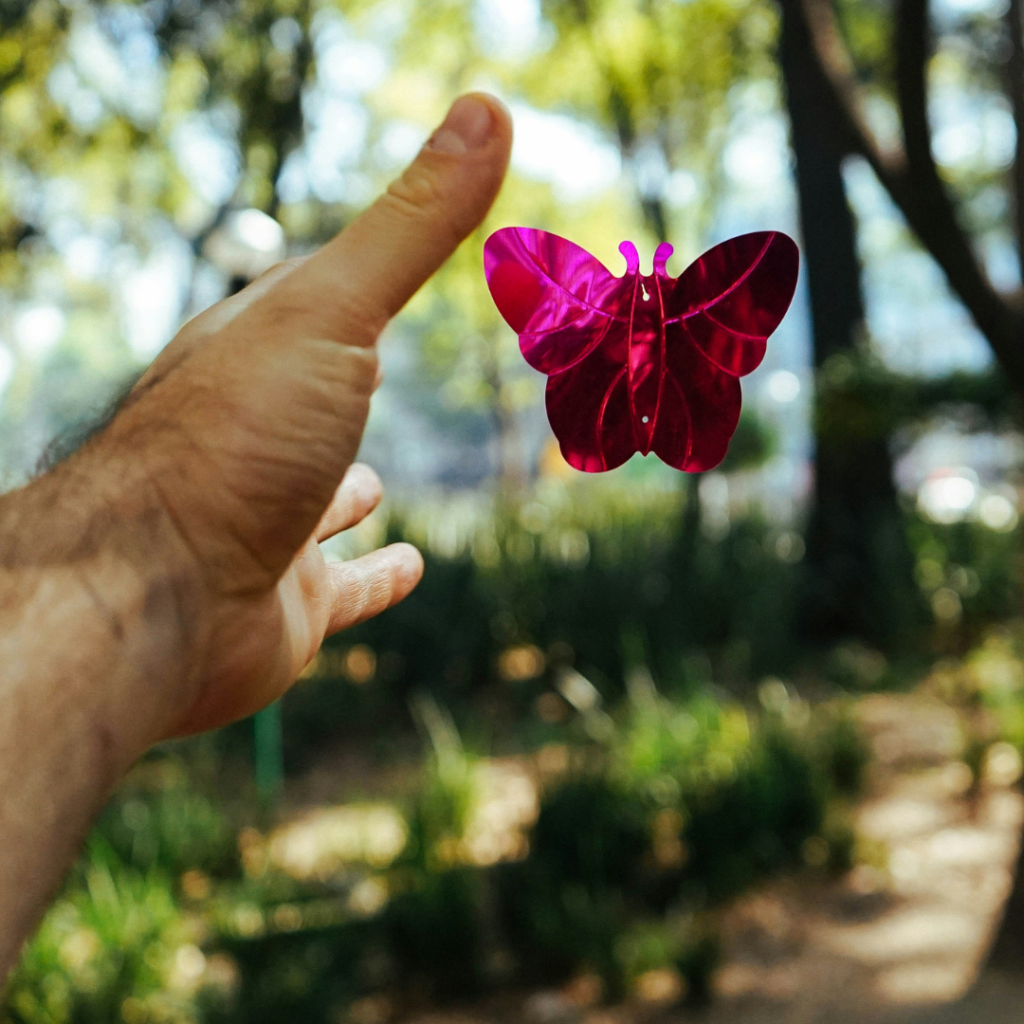
With this in mind, we can prioritize our attachments. Beginning with ourselves. As we stand at the center of our own reality, we are attached to nothing stronger than ourselves. Yet, we must also learn to let this life go when the time comes. The circles then expand outward, and as they do, the strings of attachment grow thinner. Some externals stay in their respective sphere. Such as our family and close friends, who are in our innermost group. The things or beliefs that fit our personal interests are also found here. But they all can shuffle.
Weak or strong connections
Our freedom depends on the strength of these attachments. The stronger these connections are, the more they impede our free spirit. To be clear, the closer they are to us, the stronger they are. This requires a deeper evaluation of why they are there. And so far ,we have spoken about the externals, but we can also become attached to ideas and thoughts. For example, the image we have of ourselves or of the kind of life we think we need to live. The roles we should play in society and the world at large.
If they shackle us to conformity, then we must cast them off. We can’t allow ourselves to be someone we are not. Or even worse, run the risk of compromising the virtues and the good life that is available to us. This is the reason why we need to start with ourselves. Only then can we build a good foundation to stand strong on.
The right kind of attachment
To find the right kind of attachment or level of connection, we need to understand ourselves. By having a clear and good idea of who we are, we can evaluate the world around us and how it all relates. To do this, we need to go to the basics, the bare necessities of what our good life requires. The more we become attached to the superfluous, the more leverage the externals have on us.
Find a way to go over everything that you are attached to. The easier you can get rid of parts of your life, the weaker the connection is. And for those externals, the ones you find difficult to part with, we need to spend more time learning to let them go. But it doesn’t mean that we need to cast them off now. We can mentally prepare for the fact that they might no longer be here.
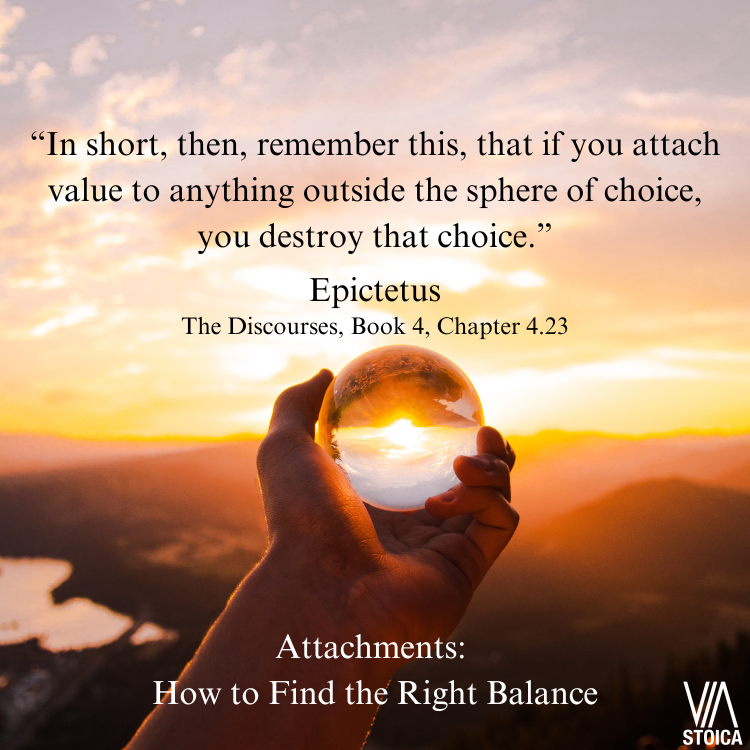
“In short, then, remember this, that if you attach value to anything outside the sphere of choice, you destroy that choice.”
Epictetus, The Discourses, Book 4, Chapter 4.23
Want to explore more Stoic Practice?
Book a free consultation with one of our Stoic Coaches to get support. Or read about the other Book reviews. Listen to the Via Stoica Podcast on Spotify, Apple Podcasts, or YouTube.
Author Bio
Benny Voncken is the co-founder of Via Stoica, where he helps people apply Stoic philosophy to modern life. He is a Stoic coach, writer, and podcast host of The Via Stoica Podcast. With almost a decade of teaching experience and daily Stoic practice, Benny creates resources, workshops, and reflections that make ancient wisdom practical today.
Related Posts
-
 Inner Life Terms
What Are Values? Principles That Guide Action and Display Nature
What are Values? Most people don’t wake up thinking about their values. They notice them indirectly, when something feels slightly misaligned. When a choice looks right on paper but leaves a faint sense of resistance. When success arrives, yet doesn’t land the way it was expected to. Values are often mistaken for opinions, preferences, or […]
Read more -
 Via Stoica Podcast
A Stoic Conversation with Jason Nelson: Six Seeds for a Happier Life
What if happiness is not something you achieve one day, but something you practice every day? In A Balm for Your Soul: Six Seeds for Happiness, Jason Nelson offers a grounded and humane answer to a question many people quietly struggle with: Why does life still feel off, even when things look good on paper?Rather […]
Read more -
 Greek Stoic Philosophy Terms
What Is Philanthropia? How Stoicism Views Love for Humankind
What Is Philanthropia? Philanthropia in Stoicism is the cultivated disposition to care for human beings simply because they are human. It describes a rational, practiced goodwill toward others that flows from understanding our shared nature, rather than from emotion, obligation, or reward. This concept matters today because modern life often treats kindness as optional, sentimental, […]
Read more

Comments 0