
The Stoic Reading List for Beginners: From Aurelius to Robertson
Embark on your Stoic journey with this beginner's reading list. Explore ancient and modern Stoic works to build a solid foundation for daily practice.

This Stoic reading list for beginners is a list of what books to read when starting your journey into Stoicism. From the ancient texts, combined with more modern Stoic works, you’ll grow your knowledge in an interesting and practical way. The idea is to build a solid foundation of knowledge to be implemented in daily practice.
Since we often get the question of what Stoic books to read, I am sharing some of the best here. We’d like to read your views on this list in the comments. There is some personal preference involved, and these could be read in any order. But I’ll try to make my case clear on why this order makes sense to me. What I hope this Stoic reading list for beginners does is help more people pick up Stoic material and start their journey. It has changed my life, and I hope it will do the same for them.
The Meditations – Marcus Aurelius
That the Meditations by Marcus Aurelius are at the top of this Stoic Reading list shouldn’t be a surprise. It’s a wonderful journal of Marcus Aurelius’s thoughts and reflections. Even people not interested in Stoicism can enjoy this book and learn a lot from it. The wisdom on display in this book has transcended the ages. It is the perfect book to introduce the Stoic concepts to people, without labeling them as such. A reasoned reader can pick up on the points and agree with most of them. Paving the way for a deeper dive into Stoicism.
The Meditations are a collection of thoughts written by one of the five good Emperors of Rome. He’s one of the best-known ones. His book has helped world leaders up to the present day to overcome their struggles. World leaders such as Nelson Mandela, George Washington, and Bill Clinton. It was never meant for publication, and that’s what makes this book so special. It’s an intimate encounter with one of the greatest people in our known history. We can also see that not much has changed. Marcus Aurelius speaks about how everything happens in cycles, and the evidence lies in our reading the book now. Because much of what he tells himself is still relevant to us.
An interesting video to watch either before or after finishing The Meditations by Marcus Aurelius is this lecture by Michael Sugrue.
How to Think Like a Roman Emperor – Donald Robertson
Now is the time for some history, some background information on Marcus Aurelius, and a breakdown of Stoicism. Donald Robertson does a great job at combining these elements while connecting them to our modern-day society and Cognitive Behaviour Therapy. First, it provides us with a good idea of what life would have been like back then for Marcus Aurelius and how he would have grown up. It uses that to build the character of this great emperor and show us his struggles and how similar they are to ours. Understanding the background will make you appreciate the true beauty of the Meditations even more.

Furthermore, How to Think Like a Roman Emperor deserves this place on this reading list for beginners because it explains Stoicism in an easy-to-understand way. Providing practical tips on how to apply it to your life. Moreover, it shows its relevance to us as the book links the philosophy to our present-day lives. This book will help you get a better understanding of what Stoicism is. And a beginner will be able to recognize parts of their own lives where Stoicism can help them.
Using the example of Marcus Aurelius to do so provides a great narrative and an excellent example. There is no way a reader can make up an excuse not to apply it. If the Emperor of the Roman Empire was able to live a virtuous life, with all the wealth and power in his hands, then surely we can control ourselves enough to live a good life.
Check out our book reviews on some of the other works by Donald Robertson:
- How to Think Like A Roman Emperor
- Stoicism and the Art of Happiness
- Marcus Aurelius: The Stoic Emperor
- How to Think Like Socrates
The Discourses and the Handbook of Epictetus
Back to the ancients, we go from the emperor to a former slave. Epictetus was a slave to an underling of Emperor Hadrian. He was freed, but not before his owner supposedly crippled him, and Musonius Rufus became his Stoic teacher. From his rough start in life, he became one of the more famous Stoic teachers during the Roman Stoa. Although he and Marcus Aurelius lived during the same era, Epictetus died when Marcus Aurelius was in his teens, and they never met. Through a student of Epictetus, Quintus Junius Rusticus, who became Marcus Aurelius’s teacher, the emperor received the teachings of the slave. We can see Marcus thanking Rusticus in book one of the Meditations for this fact.
“And for introducing me to Epictetus’s lectures – and loaning me his own copy.”
Marcus Aurelius, Meditations, Book 1.7
During the reign of Emperor Domitian, who banished all philosophers from Rome, Epictetus went to Nicopolis in Greece. This is where he started to teach Stoicism and spent the rest of his life. He never wrote anything himself, but one of his students took meticulous notes and composed them into the Enchiridion, the handbook, and the discourses we have now. Some of the books of the discourses went missing. We have four left.
Epictetus tells it the way it is
Epictetus is a straight talker, and he tells you the truth and how philosophy works. That’s why he comes right after Marcus Aurelius on this Stoic Reading list. He could have been first, especially his handbook, were it not that the Meditations are more popular and will ease the beginner better into Stoicism. But Epictetus is a must-read for anyone who wishes to learn about Stoicism and apply it. In the discourses, we can read about conversations he had with people who asked him questions about how to act in certain circumstances. These give us a good idea of how we should approach life. The handbook contains easy-to-remember lessons that we can keep with us during times when we need more guidance.
How to be a Stoic – Massimo Pigliucci
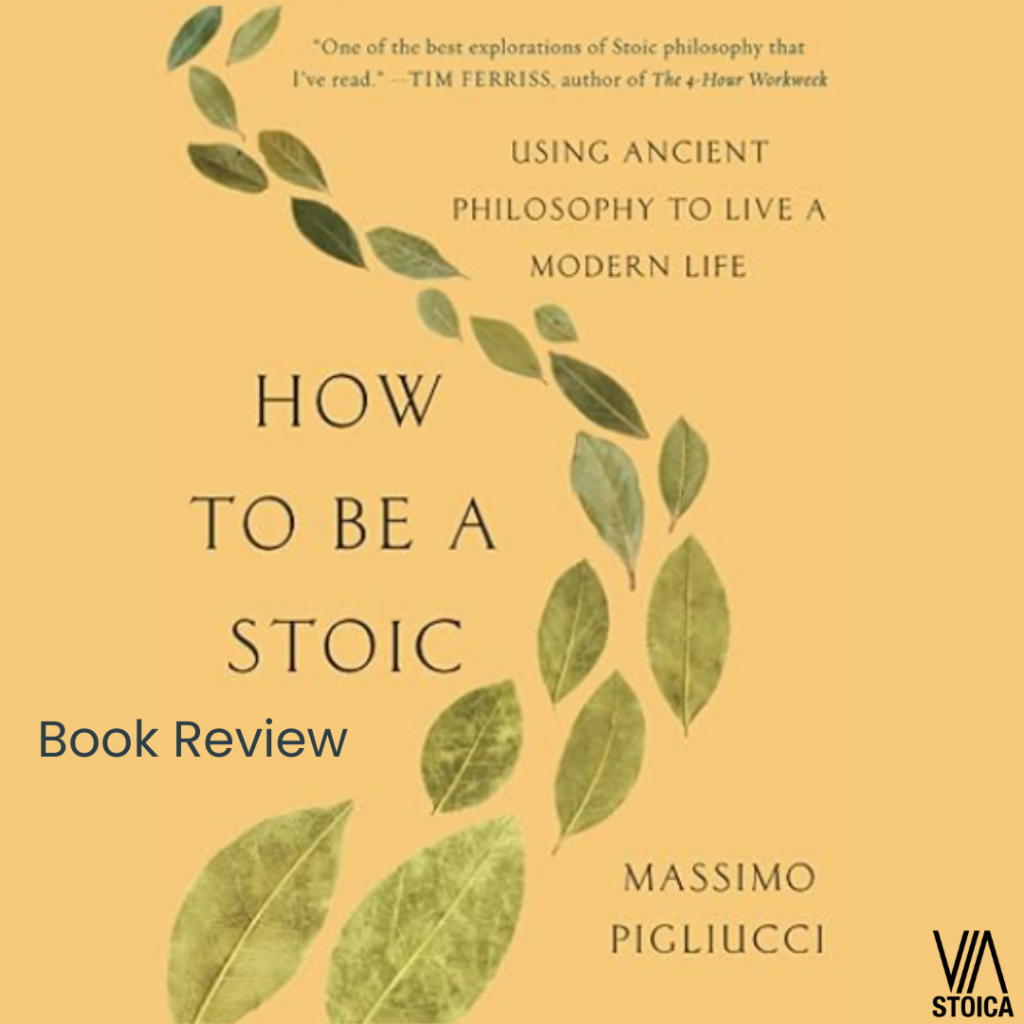
What kind of advice would Epictetus give us about our modern-day problems? Massimo Pigliucci has an interesting conversation with Epictetus to help us deal with our lives in the present day. That’s why I place this book here on the Stoic reading list because it will help us better understand the ideas of Epictetus. Besides that, it connects them to problems we can face in our lives. The most important thing to remember about Stoicism is that it should be applied to our lives. We can read all these books, but if we don’t do anything with them, then they are useless.
How to be a Stoic is the link between the teachings of Epictetus and us applying them to our daily lives. It touches on all the different aspects of Stoicism. It gives us exercises, practical tips, and ways to practice mindfulness. The expertise on display by Massimo Pigliucci is clear, and it shows that he has adopted this philosophy to his own life. A beginning Stoic can use these examples and take the lessons from Epictetus to improve their life immediately.
Read the book reviews of Massimo Pigliucci’s books:
Letters from a Stoic – Seneca
From the Stoics, we know, Seneca has left us with most of the texts out of all of them. In Letters from a Stoic, we can read the correspondence he had with a friend of his, Lucilius Junior, a native of Pompeii. Our beginning Stoic could also pick up any of the other texts by Seneca, which we can find in the Dialogues and Essays, for example. The reason why we find this one on the Stoic Reading list is that it will give us a better and more diverse insight into the mind of Seneca. The letters are written to explain his ideas and philosophy to a dear friend. Most of these letters are responses to a question or something that Lucilius has experienced. That makes it easier for us to take the place of Lucilius and let Seneca speak to us directly.
While Marcus Aurelius wrote to himself in different styles, sometimes direct and others more poetic. Epictetus tells us how life is to be lived in a more direct approach. We can see that Seneca explores all corners of the language. He doesn’t take satisfaction in only writing an answer; he wants to make it beautiful. Using elaborate examples and sentences, we can now see all over the internet. He recognized the power of the pen and how the reader’s attention was captured by beauty. This is what has made his texts so popular throughout the ages. Our Stoic in progress will notice this, and it will show the wonder in its philosophy.
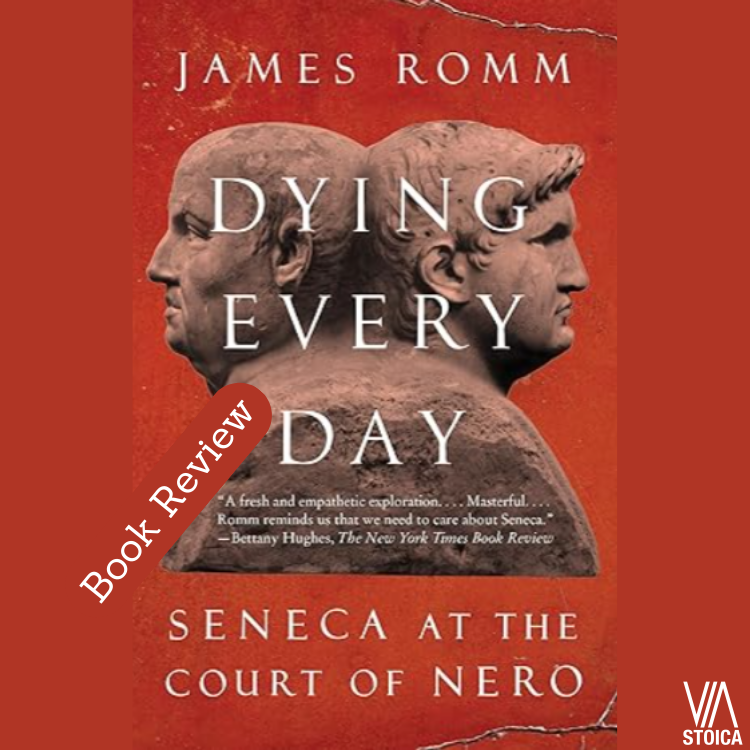
One extra tip: Dying Every Day: Seneca at the Court of Nero
Before we go to the last book on the list, here is an extra tip that is focused on Seneca and his life. Although it doesn’t focus as much on Stoic philosophy as the others, Dying Every Day: Seneca at the Court of Nero gives you a great view into his life and the world he lived in. You can read our book review on this excellent read here.
A Guide to the Good Life – William B. Irvine
To wrap up this Stoic reading list for beginners, we leave with an excellent guide to living a good life. William Irvine gives us all the tools and practices to use the information we’ve gathered in the books on the list and live in accordance with nature. Now that we are on this part of our journey, it is time to reflect. How well have we been living, and this book will hold the mirror right in front of us. It shows us many of the wrong impressions people have about Stoicism, but Irvine is also not afraid to keep an open and critical mind to the philosophy itself. Wondering if he might look back at this journey and question his beliefs and actions.
But he shares with us his personal experiences and shows us different techniques. Together with moments when Stoicism can help us remain in control and calm. It’s a great addition to the other modern books on Stoicism as it gives us a different angle and take on how it can improve our lives. The only reason this book is in this position in the list is that the others had a more direct link to the authors of the ancient texts. But this could be as good as any of them to start your journey with.
The Stoic Reading List
There are other books on Stoicism out there, and we should not forget the texts available to us by Musonius Rufus, who was the teacher of Epictetus. We can find those in a book called That One Should Disdain Hardships. Looking at the philosophy section in a bookstore, we can tell that Stoicism is making a resurgence. More people are looking for a guide or some clear ideas on what a good life is. And Stoicism provides a pragmatic and practical approach that appeals to people. There will, of course, be other books that might need to be on this list, and I’d love to hear from you about what you would have liked to have seen here.
This list is my personal opinion, as I have read these books and think that this is a great order in which to do so. I didn’t do it this way myself, but looking back on it, this would have made sense. I wish the new Stoic student a wonderful journey. And I will leave you with a reminder by Epictetus to keep in mind as you start reading.
“Philosophers exhort us not to be contented with mere learning, but to add practice also, and then training.”
Epictetus, the Discourses, book two, chapter 9.13
Want to explore more Stoic Practice?
Book a free consultation with one of our Stoic Coaches to get support. Or read about the other Book reviews. Listen to the Via Stoica Podcast on Spotify, Apple Podcasts, or YouTube.
Author Bio
Benny Voncken is the co-founder of Via Stoica, where he helps people apply Stoic philosophy to modern life. He is a Stoic coach, writer, and podcast host of The Via Stoica Podcast. With almost a decade of teaching experience and daily Stoic practice, Benny creates resources, workshops, and reflections that make ancient wisdom practical today.
Related Posts
-
 Inner Life Terms
What Are Values? Principles That Guide Action and Display Nature
What are Values? Most people don’t wake up thinking about their values. They notice them indirectly, when something feels slightly misaligned. When a choice looks right on paper but leaves a faint sense of resistance. When success arrives, yet doesn’t land the way it was expected to. Values are often mistaken for opinions, preferences, or […]
Read more -
 Via Stoica Podcast
A Stoic Conversation with Jason Nelson: Six Seeds for a Happier Life
What if happiness is not something you achieve one day, but something you practice every day? In A Balm for Your Soul: Six Seeds for Happiness, Jason Nelson offers a grounded and humane answer to a question many people quietly struggle with: Why does life still feel off, even when things look good on paper?Rather […]
Read more -
 Greek Stoic Philosophy Terms
What Is Philanthropia? How Stoicism Views Love for Humankind
What Is Philanthropia? Philanthropia in Stoicism is the cultivated disposition to care for human beings simply because they are human. It describes a rational, practiced goodwill toward others that flows from understanding our shared nature, rather than from emotion, obligation, or reward. This concept matters today because modern life often treats kindness as optional, sentimental, […]
Read more

Comments 0