
What Does Home Mean?
What does home mean is an examination of where we can find our home and where it is not. Can it be anywhere with us?
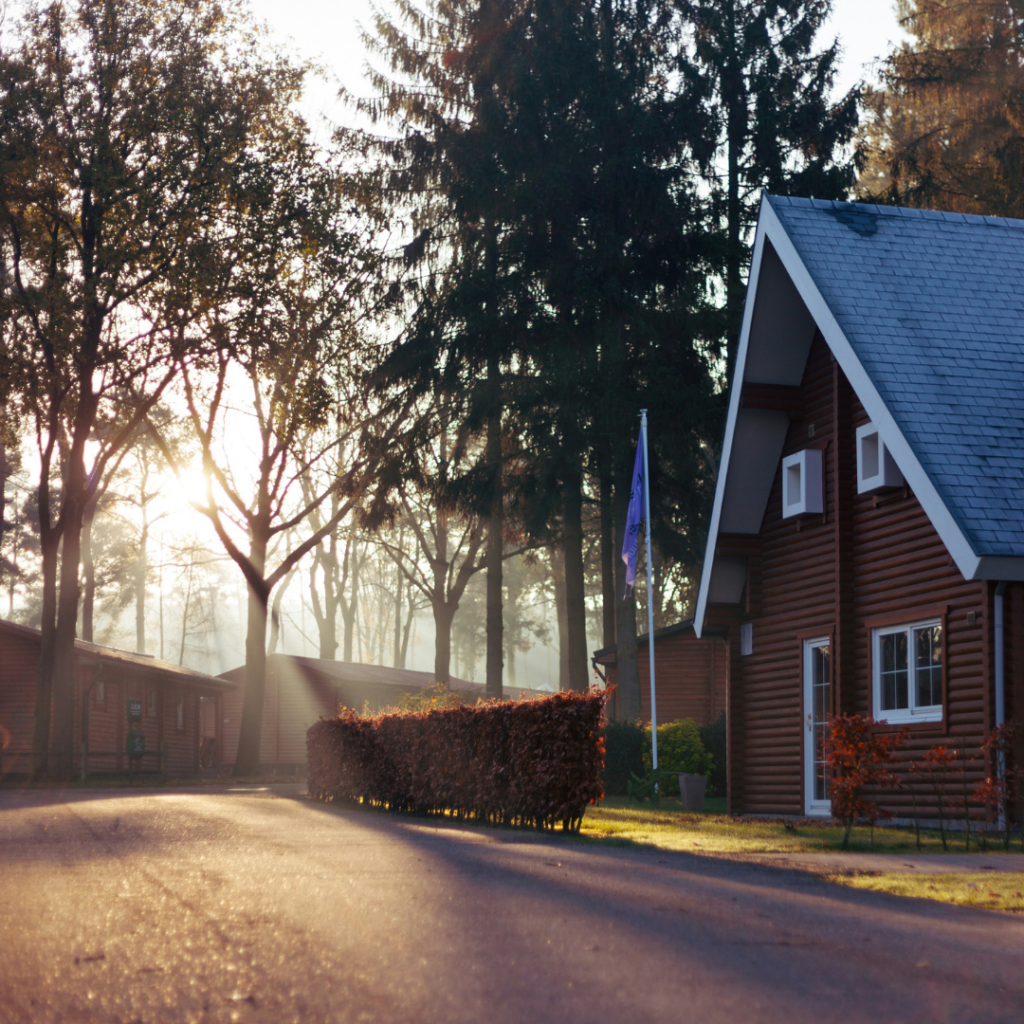
What does home mean? As I’m trying to answer this question, I find myself house and dog sitting somewhere south of San Francisco. A short stop while traveling through the U.S., heading down to Mexico. I’ve lived abroad for over a decade, but I’m not sure if I can call that traveling. Although it did span a few different countries, cities, and many houses. Being from the Netherlands, I find it strange to think of myself living there for a long time. Don’t get me wrong, I’m in a very privileged situation. Holland is a perfect country to fall back on in case I need to. But if I see it as my only home, I can’t tell. A great refuge it is for sure.
What constitutes a home? What do we mean by home? The phrase; home sweet home, comes to mind. Or, home is where the heart is. All these lovely sayings are nice, but what is it? Many people lose their homes every year, as others choose to abandon theirs. Should we be so focused on labeling a place as home? Can we call the heart home? How does this concept affect our happiness? Can it add to it, or is it a source of disruption? Let’s ask the Stoics and see if they can help us.
Traveling to find our home
I’ve written a post on traveling, which kind of connects to this one. When we go away, we leave our home. Some do so for a short term, knowing that their comfortable life will be waiting for them. Others, like myself, pack everything and set sail. Speaking for myself, it is a sense of exploration with restlessness. And I’m still trying to reign it in to rid myself of this urge.
“I find some people who say that a certain restlessness dwells naturally in the hearts of men, prompting them to change their dwelling-places and find new homes; for man has been given an inconstant and restless mind that lingers nowhere, but travels far and wide, dispatching its thoughts to all place known and unknown, roving, intolerant of rest, and delighting in new environments.”
Seneca, Dialogues and Essays, Consolation to Helvia, 6
I’m still working my way through this, and maybe Seneca described me there. Should I then embrace it? That sense of restlessness is something I feel many ties to. I try to have my reasons for why I want to travel focused on the right things. But I could try to follow my own advice more often. Like this quote from my Why We Travel post.
“How can you wonder your travels do you no good, when you carry yourself around with you? You are saddled with the very thing that drove you away.”
Seneca, Letters From a Stoic, Letter XXVIII
Home is where the mind is

The Stoics would begin by changing the phrase mentioned before, too; home is where the mind is. And I’d go a long way with them there. Before we get there, let’s examine what the home means. When we are raised, we get this picture painted of what the perfect life should look like. We should buy a house, have a family, have possessions, create a social life, have a good career, etc. When we have these, our lives will be happy, and we will be well.
The Stoics tell us to look at them as preferred indifferences. If you wish to aim for these, by all means, go ahead. But remember what they are. They are externals and not under our control. There are too many variables to ensure that this is the life we can have. And even if we manage to achieve it, it can be taken away from us.
A cause for anxiety
Why are these so important to us? Well, a house, family, career, and a social network provide us with safety and comfort. In this setting, we know what is going on. When we travel, everything is new and scary. We decorate our house the way we want to, so it reflects who we are. Remember that everything around us is a mirror of who we are. These possessions might, however, reflect something we think we want. As we live there, this is what we’re after, some of us at least, to create an image of how we see ourselves. And having a nice home is a wonderful haven of peace. If you have it and can get it. But it can also be a source of anxiety.
Sometimes, in order to achieve all these things, we over-stretch ourselves. Leaving us exposed to forces we are not able to endure. For example, a mortgage we struggle to pay. Which means we have to stay in a job we might not want. Returning to that home after every hard day at work might feel like rest. But when the home is where all the stress originates from, then there might be something wrong. That’s why we need to ask ourselves: what does home mean? When I think of a home, I picture peace and quiet. Familiarity, routines, and safety as well. But where can we find that?
Find your home in exile
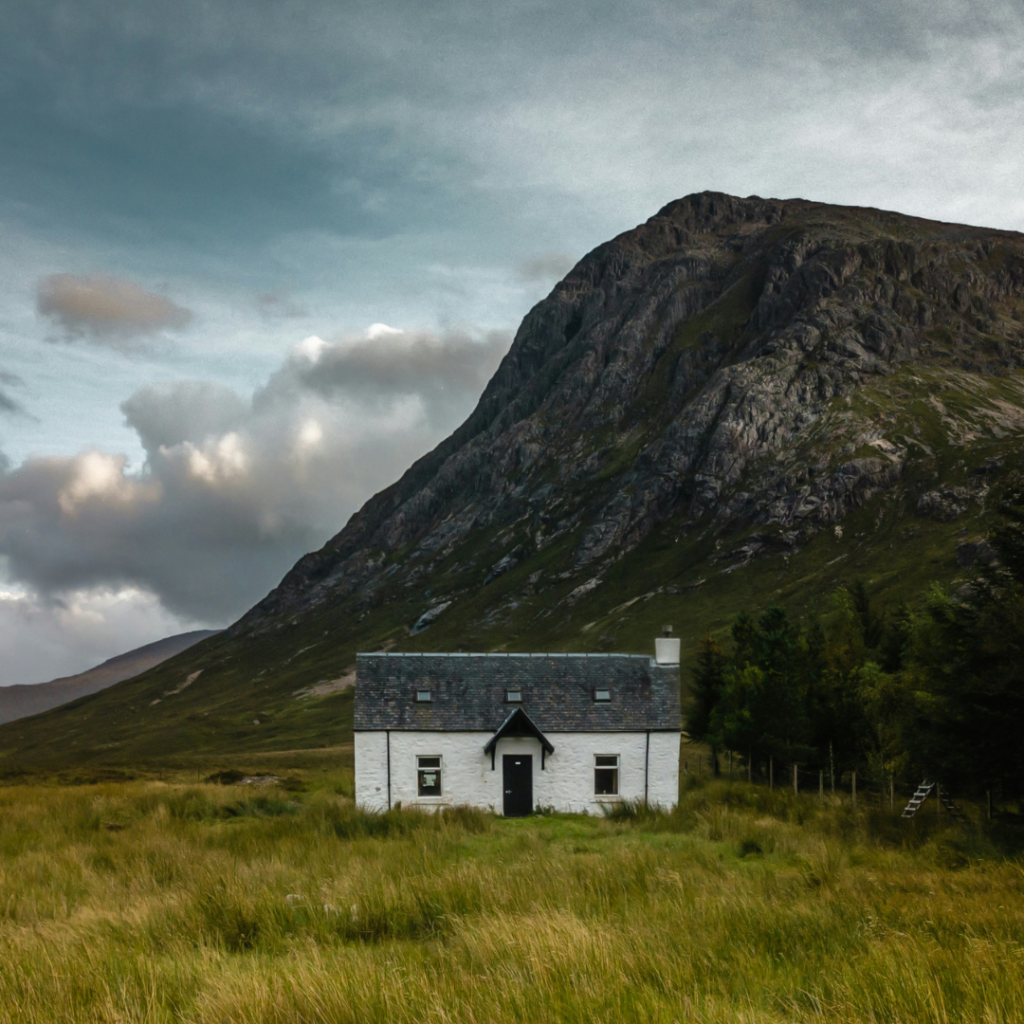
It’s an idea, something we fabricate. And if we want to find our true concept of home, we should break down all the external views and focus on what matters to us. If these ideas don’t match our current situations, then even while in the comfort of our created oasis, we can feel far removed from being at home. Sometimes, to find our home, that’s exactly what we need. To be so far away from it that we can see it by its shadow. The negative image left might show us the piece that is missing.
Many of the ancient philosophers had to deal with exile. Emperor Domitian banished Epictetus and many other Stoic philosophers because they favored his opponents. This led Epictetus to go to Nicopolis, where he remained and taught philosophy. And when answering a question regarding the Cynics, he gave an example of how to treat exile. One that we can adopt in this topic.
“In the first place, then, you must purify your own ruling faculty, and hold to this plan of life… Exile? And where can anyone banish me to? Not beyond the universe. But wherever I go, there will be the sun, the moon, the stars, dreams, auguries, communication with the gods.”
Epictetus, Discourses, Book three 22.19-22
A consolation to us all
Seneca wrote a letter to his mother, Helvia, while he was in exile on the rocky island of Corsica. Although he gives us hints that he is not completely enduring it, the way he tries to console his mother. He does show us what the most important things are that we take with us anywhere. They can help us endure anything. Marcus Brutus, the famous conspirator against Julius Caesar, inspired Seneca. He was known as a Stoic Philosopher.
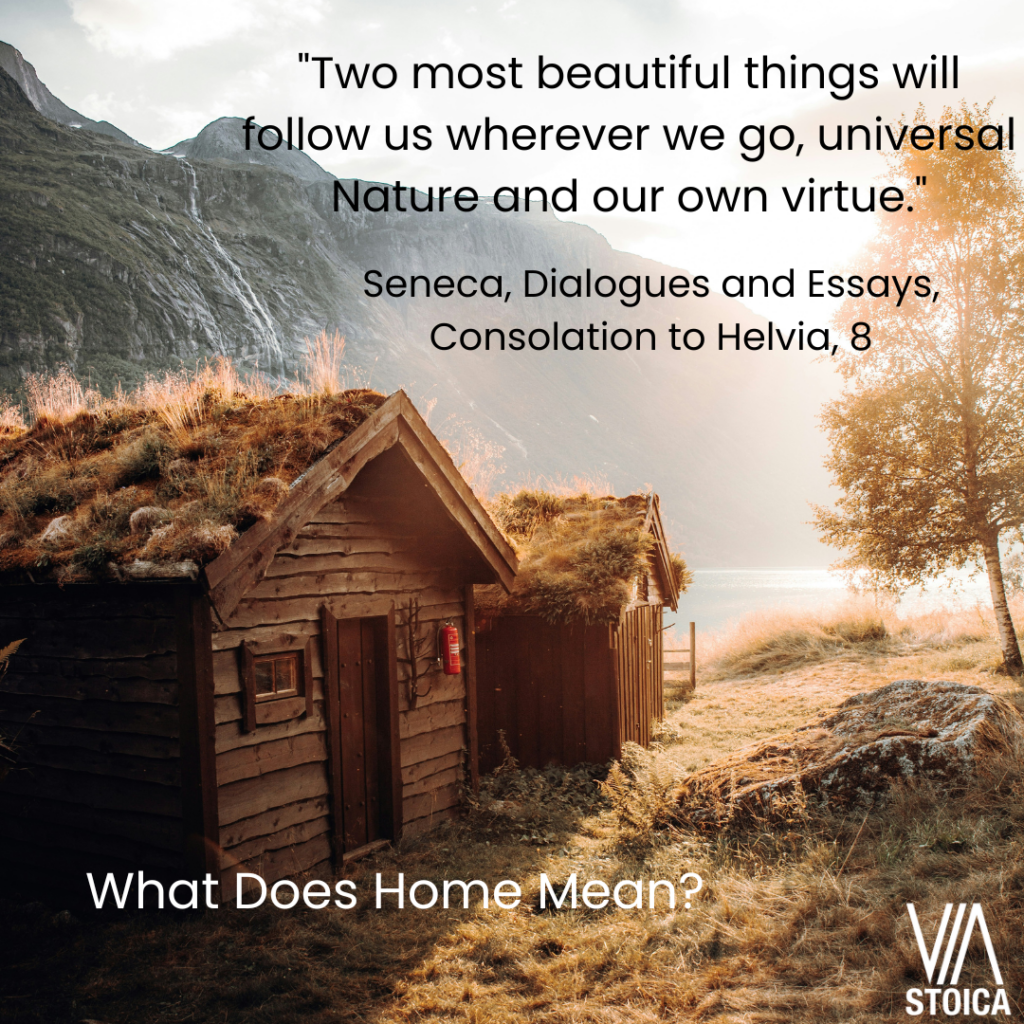
“Two most beautiful things will follow us wherever we go, universal nature and our own virtue. This, believe me, was the will of the great creator of the universe, whoever he was, whether a god with power over all, or incorporeal reason, the designer of mighty works, or a divine spirit permeating all things great and small with equal energy, or fate and an unchangeable sequence of causes that cling one to another; this, I say, was his will, in order that only the most trivial of our possessions should fall under the control of another. All that is of the greatest worth for a man lies outside the power of his fellow men, and can neither be given or taken away.”
Seneca, Dialogues and Essays, Consolation to Helvia, 8
Seneca continues with a little more.
“And so, eagerly, with heads high and unfaltering steps, let us hasten wherever circumstances take us, let us traverse each and every land: no place of exile can be found within the universe, for nothing within the universe is foreign to man.”
Seneca, Dialogues and Essays, Consolation to Helvia, 8
What does home mean? Home is us, and that is all. We are part of everything and can thus claim everything to be our home. Whether we are free in the homes we find ourselves that is up to us. A physical home can trap us when it binds us to external factors. We can also get too attached to our possessions, and the fear of losing them can have a hold on us. While we should remember that all that we need is found within us. We have our reason and logic, our virtues and values. If we stay close to them, then we can never find ourselves without a home.
Want to explore more Stoic Practice?
Book a free consultation with one of our Stoic Coaches to get support. Or read more about How to Practice Stoicism here. Listen to the Via Stoica Podcast on Spotify, Apple Podcasts, or YouTube.
Author Bio
Benny Voncken is the co-founder of Via Stoica, where he helps people apply Stoic philosophy to modern life. He is a Stoic coach, writer, and podcast host of The Via Stoica Podcast. With almost a decade of teaching experience and daily Stoic practice, Benny creates resources, workshops, and reflections that make ancient wisdom practical today.
Related Posts
-
 Greek Stoic Philosophy Terms
What Is Ekklisis? The Stoic Art of Avoiding What Harms Your Character
What Is Ekklisis? Ekklisis in Stoicism is the rational refusal to engage with what would damage one’s moral choice. The Stoic meaning of ekklisis is important because it teaches us what to turn away from, not out of fear, but out of commitment to living well. In daily life, ekklisis helps us step back from […]
Read more -
 Via Stoica Podcast
A Hark Audio Curated Stoic Playlist for 2026
At the start of a new year, there is often an unspoken promise that things will somehow be different. Calmer. More ordered. More predictable. Yet life rarely follows that script. Delays disrupt flights, plans break down, people drift away, and life brings events we cannot control. What we can work on, and what Stoicism has […]
Read more -
 Book Reviews
The Stoic Leader by John Sellars and Justin Stead
The Stoic Leader introduces Stoicism as a practical philosophy and explores how its principles shape leadership, judgment, and character in both work and life. Summary Written by John Sellars and Justin Stead, The Stoic Leader offers what is effectively two books in one. Sellars provides an introduction to Stoicism and its philosophical foundations, while Stead […]
Read more

Comments 0