
Seneca: Stoic Philosopher or Statesman of Rome
Who was Seneca? A brief introduction into the life of Seneca and a little scene of how I pictured meeting him would be like.
Who Was Seneca?

Philosopher: Seneca (Lucius Annaeus Seneca the Younger) | Lived: c. 4 BC to 65 AD | Born: Corduba (modern-day Córdoba, Spain) | Status: Roman statesman, tutor and advisor to Emperor Nero | Known For: Letters to Lucilius, On the Shortness of Life
Lucius Annaeus Seneca the Younger (c. 4 BC to 65 AD) was a Roman Stoic philosopher, statesman, and tutor to Emperor Nero, born in what is now Córdoba, Spain, into a wealthy equestrian family, one rank below the senators, the highest social order in the Roman Empire. Over the course of his life, Seneca rose through the ranks of power to stand shoulder to shoulder with emperors. His life was filled with intrigue, politics, and tragedy, yet today he is remembered not for his wealth or influence but for his words: philosophical essays and letters that continue to resonate two thousand years later.
Family and Early Life
Seneca came from an educated and prominent family. His father, Marcus Annaeus Seneca the Elder, was a well-known rhetorician of Italian descent. His mother, Helvia, is remembered through Seneca’s moving Consolation to Helvia, written during his exile in Corsica.
He had two brothers: Annaeus Novatus, later known as Junius Gallio, the proconsul of Achaia mentioned in the New Testament for releasing the Apostle Paul, and Annaeus Mela, whose son, the poet Lucan, became famous for his epic Pharsalia on the Roman civil war.
The Start of Public Life
Seneca went to Rome at an early age to study rhetoric and philosophy, but struggled with chronic illness, possibly asthma. Seeking relief, he spent time in Egypt for its better climate before returning to Rome in 31 AD to begin his public career.
His rise coincided with the reign of Gaius Caligula, the infamous emperor known for cruelty and vanity. According to the historian Cassius Dio, writing roughly a century and a half later, Caligula grew jealous of Seneca’s eloquence and ordered him to take his own life, a sentence withdrawn only when someone reminded the emperor that Seneca’s poor health might soon do the job for him.
Claudius and Exile
Caligula’s successor, Claudius, soon became suspicious of Seneca as well. Accused of adultery with Claudius’s niece, Julia Livilla, he was exiled to Corsica, where he spent eight years in isolation and loss. Modern historians generally regard the charge as fabricated, most likely engineered by Claudius’s wife Messalina to remove a rival influence from court rather than a genuine affair. During this period, he also mourned the death of his only son with his wife, Pompeia Paulina.
Despite the hardship, Seneca continued to write prolifically, refining his Stoic thought and producing some of his most introspective works.
His return to Rome came through the influence of Agrippina the Younger, sister of Caligula and now the wife of Claudius. Ambitious and politically astute, Agrippina sought to secure the future throne for her son, Lucius Domitius Ahenobarbus, who would later be adopted by Claudius and renamed Nero.
Seneca the Tutor
Agrippina chose Seneca to educate her son, hoping his wisdom and rhetoric would prepare Nero for leadership. When Nero became emperor at just sixteen, Seneca, together with Sextus Afranius Burrus, the head of the Praetorian Guard, became one of the young ruler’s two key advisors.
During the first five years, the Empire flourished under their joint guidance, a period later called the quinquennium Neronis, or “the five good years of Nero.”
But the harmony would not last. When Nero had his stepbrother Britannicus poisoned and later murdered his own mother, Agrippina, Seneca’s influence began to wane. After Burrus’s death in 62 AD, Seneca requested retirement, even offering to surrender his vast wealth, but Nero refused. To withdraw quietly would make Seneca appear noble and Nero weak.
Still, Seneca retreated from public life, devoting his final years to philosophy and writing.
Seneca and His Stoic Contemporaries
Seneca belongs to an earlier Stoic generation than Epictetus or Marcus Aurelius. He died in 65 AD, around the same years Epictetus was born, and Marcus Aurelius wasn’t born until decades after Seneca’s death. His years do overlap briefly with Musonius Rufus’s youth, but the two never crossed paths in any documented way. Zeno of Citium, who founded the school Seneca inherited, lived and died more than three centuries before any of them. The timeline below shows how these five lives actually lined up.
Seneca died the same decade Epictetus was born. Their lives never overlapped in any meaningful way, Seneca belongs to Nero’s Rome, Epictetus and Marcus Aurelius belong to the generations after.
Seneca’s Writings
Between 62 and 65 AD, Seneca composed his famous Letters to Lucilius, addressed to a young friend from Pompeii. Though no replies survive, the letters read like a moral dialogue: Seneca shaping the life of a student while reflecting on his own.
He also wrote essays such as On Anger, On the Happy Life, On the Tranquil Mind, On Mercy, and several Consolations. His tragedies, inspired by Greek models, explore themes of fate and moral collapse, while Natural Questions investigates the workings of the physical world, showing that Stoicism embraced both ethics and science.
His works influenced early Christian thinkers, Renaissance humanists, and modern philosophers alike. They continue to resonate because they deal with what does not change: human emotion, ambition, and the search for peace.
Seneca’s Death
In 65 AD, Seneca was accused of involvement in the Pisonian Conspiracy, a plot to assassinate Nero. Ordered to take his own life, Seneca prepared for death calmly, in true Stoic fashion.
The account we have comes almost entirely from the historian Tacitus, writing roughly fifty years later in his Annals, and it reads like a deliberately staged scene, one that seems to echo the death of Socrates on purpose. Like his hero Socrates, Seneca had long kept hemlock ready for such a moment. Yet his end was far from peaceful in Tacitus’s telling. When cutting his veins failed, he entered a hot bath, and finally drank the poison, his strength fading slowly as steam filled the room. His wife, Pompeia Paulina, attempted to follow him in solidarity but was stopped and survived.
Seneca died as he had lived: within the contradictions of Stoicism and power, but steadfast to his principles until the end.
Who Was the Real Seneca?
Seneca preached voluntary poverty and autarkeia, self-sufficiency independent of wealth or status, while accumulating one of the largest fortunes in Rome. He wrote movingly about the importance of withdrawing from political life while spending decades at the centre of the most dangerous court in the empire. He counselled Nero on mercy while remaining close enough to power to be implicated, at least in the eyes of his enemies, in its worst excesses. His critics in his own lifetime called him a hypocrite. Some modern readers agree.
But the more honest reading is more complicated. Seneca never claimed to be a Stoic sage. He was explicit about that. He described himself as a patient making prokopē, slow progress, not a physician offering cures. His Letters to Lucilius are full of self-examination and acknowledged failure. He knew the gap between what he wrote and how he lived, and he wrote about it openly rather than concealing it. That honesty is itself a Stoic act.
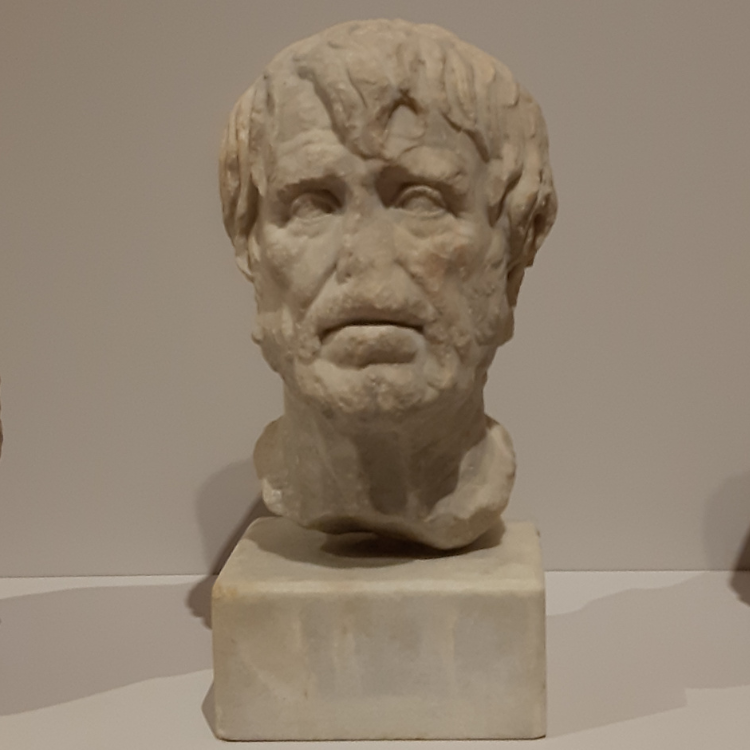
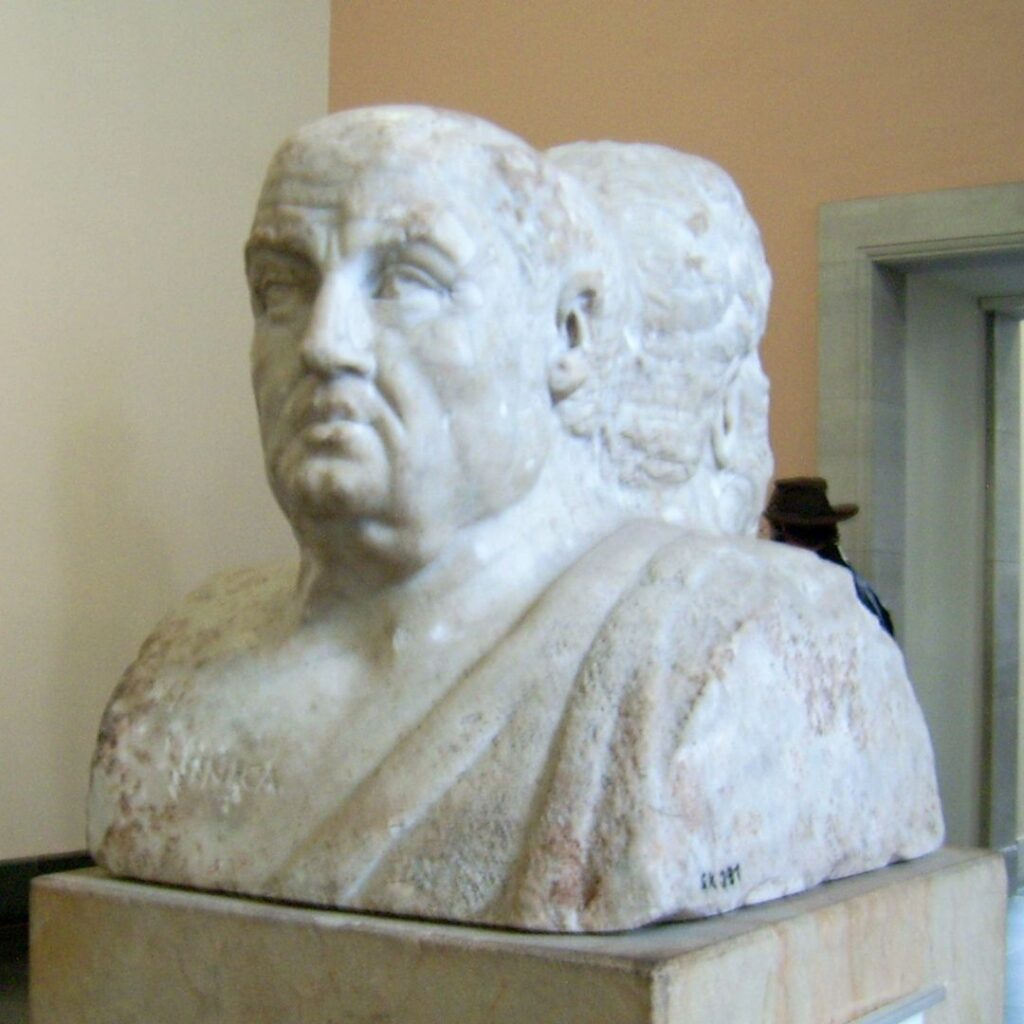
Biographer James Romm explores this paradox in Dying Every Day: Seneca at the Court of Nero. Two sculptures believed to depict Seneca embody the same tension: one lean and austere, the other round-faced and regal, both bearing his name, both mirroring a divided legacy. Whatever the final verdict, his words outlived the empire that produced them. And the question he kept returning to, how do we live well inside a world that resists it, is one that has not dated at all.
The Relevance of Seneca Today
Seneca is the most readable of all the Stoics. His prose is direct, his wit sharp, and his subject is always the same: how to actually live, not in ideal conditions but in the ones you have. He wrote from inside wealth, compromise, and proximity to power, which makes his thinking more useful to most of us than philosophy written from a position of purity.
What he understood, and returns to again and again, is that the obstacle is not out there. It is in how we spend our attention. His reflections on time, on anger, on the fear of death, and on the pull of distraction read as though written for the present moment rather than the first century.
For anyone drawn to Stoicism not as a set of perfect standards to meet but as an askēsis, a disciplined practice, of honest self-examination, Seneca is the most natural place to begin. He was not the best Stoic. He may have been the most human one.
"It is not that we have a brief length of time to live, but that we squander a great deal of that time."
Seneca, On the Shortness of Life, 1
Frequently Asked Questions
Who was Seneca?
Lucius Annaeus Seneca the Younger (4 BC to 65 AD) was a Roman Stoic philosopher, playwright, and advisor to Emperor Nero. He is best known for his Letters to Lucilius and his essays on anger, time, and the good life.
Was Seneca a good Stoic?
He was an honest one. Seneca never claimed to be a Stoic sage and was open about the gap between his philosophy and his life. He lived amid enormous wealth and political compromise, but his writings show constant self-examination and moral seriousness. Whether that is enough is a question each reader must settle for themselves.
What are Seneca’s most famous works?
Letters to Lucilius, On Anger, On the Tranquil Mind, On the Shortness of Life, and On the Happy Life. His tragedies and Natural Questions are less widely read today but equally important to understanding his full range.
How did Seneca die?
Accused of involvement in a conspiracy to assassinate Nero in 65 AD, Seneca was ordered to take his own life. He faced death with composure, consistent with his Stoic principles, though the process, as recorded by Tacitus, was prolonged and difficult.
Why is Seneca relevant today?
Because his subject was always the ordinary difficulty of living well in an imperfect world. His writing on time, distraction, anger, and the fear of death speaks directly to modern life in a way that more systematic philosophy often does not.
Where should I start reading Seneca?
On the Shortness of Life is the natural entry point: short, direct, and immediately applicable. From there, the Letters to Lucilius reward sustained reading over time. You can also explore a wide selection of his most striking ideas in the Seneca quotes collection.
Want to Explore More Stoic Practices?
Book a Stoic Coaching free consultation with Benny to explore how Stoicism can support you. Explore more Stoic vocabulary in the Stoic philosophy terms glossary, or be inspired by more than 100 Seneca Quotes. Listen to the Via Stoica Podcast on Spotify, Apple Podcasts, or YouTube.
Author Bio
Benny Voncken is the founder of Via Stoica, where he helps people apply Stoic philosophy to modern life. He is a Stoic coach, writer, and podcast host of The Via Stoica Podcast. With almost a decade of teaching experience and daily Stoic practice, Benny creates resources, workshops, and reflections that make ancient wisdom practical today.


Comments 0