
What Is Andreia? The Stoic Courage to Do What Is Right

What Is Andreia?
Andreia in Stoicism is the virtue of moral courage, the strength to act according to reason even when fear, pain, or social pressure is present. The Stoic meaning of andreia is not about bravado or toughness, but about steadiness of character in difficult moments. This concept matters because modern life constantly tests our ability to do what is right rather than what is comfortable.
Andreia shows up whenever you choose integrity over approval, patience over impulse, and virtue over fear.
Breaking Down the Word
The Greek term andreia (ἀνδρεία) is traditionally translated as courage.
- From anēr (ἀνήρ), meaning man or human being, pointing to mature moral character
- Often associated with bravery, but grounded in reason rather than emotion
- Implies endurance and firmness of the soul under pressure
For the Stoics, andreia matters because courage without reason becomes recklessness. True courage is guided by judgment and aligned with virtue, not driven by adrenaline or anger.
Key Dimensions of Andreia
- Moral courage
The willingness to do what is right, even when it brings discomfort, loss, or misunderstanding. - Endurance under difficulty
Andreia includes the ability to remain steady in pain, hardship, or uncertainty without collapsing inwardly. - Resistance to fear
Not the absence of fear, but the refusal to let fear determine your actions. - Consistency of character
Acting the same way in private and public, in ease and in adversity.
Core Stoic Principles Connected to Andreia
- Logos (reason) – Courage is rational when it follows clear judgment rather than impulse.
- Arete (virtue) – Andreia is one of the four cardinal Stoic virtues, inseparable from wisdom, justice, and moderation.
- Physis (nature) – Living courageously means responding to events as they are, not as we wish them to be.
- Sophia (wisdom) – Wisdom tells us when courage is required and when restraint is the wiser path.
Modern Misunderstandings
Andreia is often confused with toughness, emotional suppression, or dominance. In modern culture, courage is frequently portrayed as aggression, risk-taking, or the ability to overpower others. That is not the Stoic view.
Stoic courage does not mean forcing yourself through everything or ignoring vulnerability. It means seeing clearly, accepting what is outside your control, and still choosing virtuous action within what is up to you.
Why Andreia Is Central to Stoicism
Stoic thinkers like Epictetus repeatedly remind us that external events are not frightening by nature, but become so through our judgments. Courage, then, is not physical boldness but the ability to stand by reason when impressions push us toward fear or avoidance. As Marcus Aurelius shows in his reflections, inner strength is cultivated through daily practice, not heroic moments. Understanding andreia strengthens Stoic practice by anchoring action in clarity rather than emotional reaction.
Practical Applications of Andreia
- Journaling
Ask yourself where fear influenced your last decision instead of reason.
(See: How to Practice Stoicism and The Stoic View on Fear on Via Stoica.) - Pause before action
When anxiety arises, pause and identify what is truly at stake and what is merely uncomfortable. - Mindset check
Before avoiding a difficult conversation, ask whether avoidance aligns with virtue. - Daily reflection
At the end of the day, note one moment where you acted with quiet courage rather than impulse.
(Related: The Discipline of Assent and Stoic Courage in Daily Life.)
FAQ
What does andreia mean in Stoicism?
Andreia means rational courage, the strength to act according to virtue despite fear or difficulty.
Is andreia the same as bravery?
No, Stoic andreia is guided by reason, not adrenaline or emotional impulse.
How do you practice andreia daily?
By choosing thoughtful action over avoidance when faced with fear or discomfort.
Conclusion
Andreia reminds us that courage is not loud, dramatic, or forceful. It is often quiet, internal, and unseen by others. In Stoicism, true strength lies in acting according to reason, especially when it would be easier not to. By practicing andreia, we train ourselves to meet life with steadiness rather than resistance. Over time, this builds trust in our own judgment and clarity about what truly matters. Courage, in the Stoic sense, becomes a way of living rather than a reaction to crisis.
Want to explore more Stoic practices?
Book a free consultation with one of our Stoic Coaches or learn about more Stoic philosophy terms. You can also listen to the Via Stoica podcast on Spotify or Apple Podcasts or watch it on YouTube.
Author Bio
Benny Voncken is the co-founder of Via Stoica, where he helps people apply Stoic philosophy to modern life. He is a Stoic coach, writer, and podcast host of The Via Stoica Podcast. With almost a decade of teaching experience and daily Stoic practice, Benny creates resources, workshops, and reflections that make ancient wisdom practical today.
Related Posts
-
 Greek Stoic Philosophy Terms
What Is Ekklisis? The Stoic Art of Avoiding What Harms Your Character
What Is Ekklisis? Ekklisis in Stoicism is the rational refusal to engage with what would damage one’s moral choice. The Stoic meaning of ekklisis is important because it teaches us what to turn away from, not out of fear, but out of commitment to living well. In daily life, ekklisis helps us step back from […]
Read more -
 Via Stoica Podcast
A Hark Audio Curated Stoic Playlist for 2026
At the start of a new year, there is often an unspoken promise that things will somehow be different. Calmer. More ordered. More predictable. Yet life rarely follows that script. Delays disrupt flights, plans break down, people drift away, and life brings events we cannot control. What we can work on, and what Stoicism has […]
Read more -
 Book Reviews
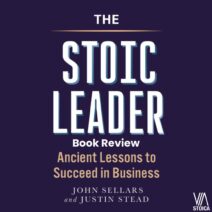
The Stoic Leader by John Sellars and Justin Stead
The Stoic Leader introduces Stoicism as a practical philosophy and explores how its principles shape leadership, judgment, and character in both work and life. Summary Written by John Sellars and Justin Stead, The Stoic Leader offers what is effectively two books in one. Sellars provides an introduction to Stoicism and its philosophical foundations, while Stead […]
Read more

Comments 0