
Why Death Needs Rebranding: A personal opinion
Why death needs a rebranding is a take on what role this taboo topic plays in our society and how to improve it to live better.
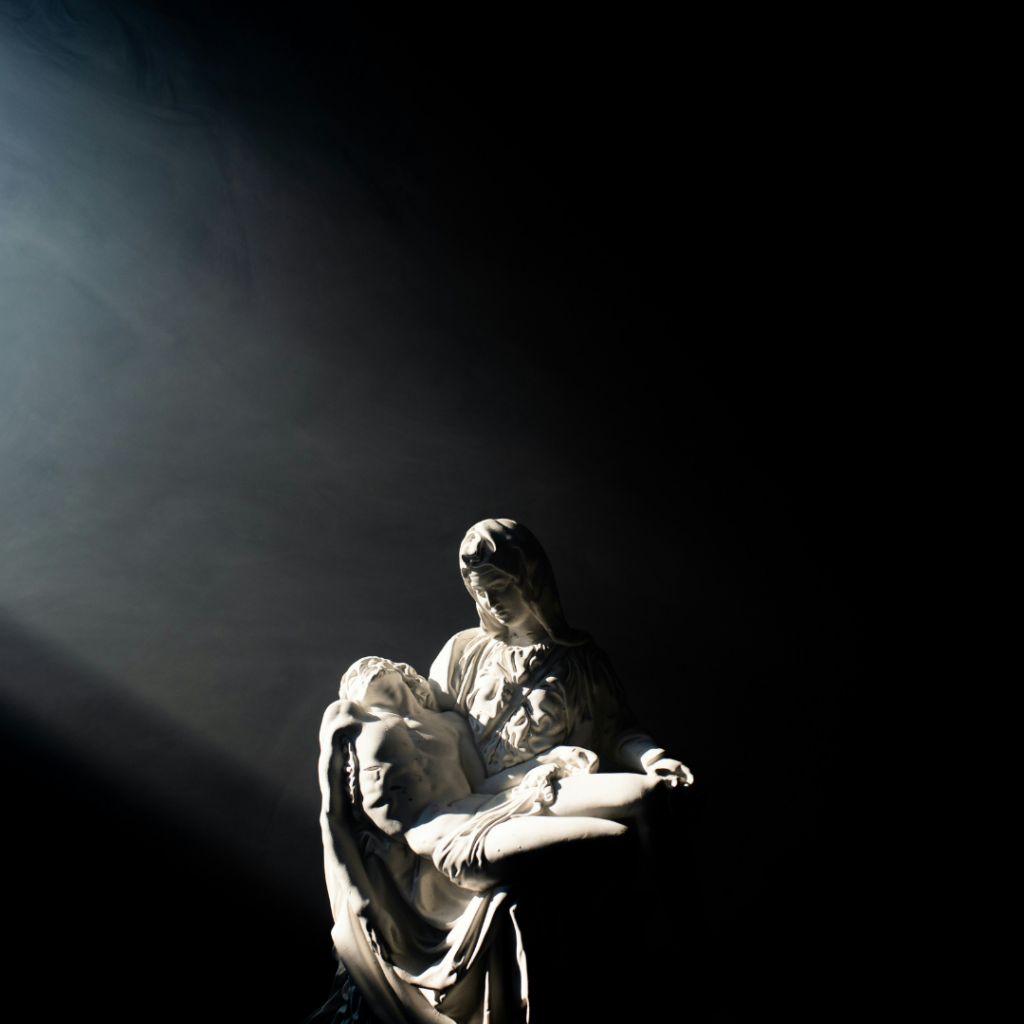
A rebranding of Death is required. We need to change our view on this major aspect of life. The one that we all share, yet can’t seem to come to terms with. At least many of us struggle with it. Like I did as well, but now I’m starting to accept my own mortality and even embrace it. We’ve been moving to an idea of death as an evil and something to avoid or even try to eliminate. It’s time we look at it, see it for what it is, and examine it. We are losing too much of our lives being afraid of something inevitable, like death. While we could use it as motivation to make the best of life.
“Just that you do the right thing. The rest doesn’t matter… Because dying, too, is one of our assignments in life. There as well: ‘to do what needs doing.’”
Marcus Aurelius, Meditations, Book 6.2
Among the Stoic texts that remain, death is a topic that keeps coming back. They saw it as the ultimate test of all that you have practiced in life, to see whether you practiced what you preached. How well you deal with death will reflect on how well you lived. Our view of death has taken a step back from this, and we’ve come to despise it. Not only do we fear it, but we try to fend it off, reverse it, and even stop it. Hoping time itself will cease to tick because that would be the only way to do so.
Turn death a blind eye
And although some of us are now more removed from death because of the advances in modern medicine and the relative safety we have in life. This is not the same for large numbers of our fellow world citizens. Many still live with death on their doorstep. In reality, it lies there waiting for us as well, but we prefer to turn a blind eye.
Why does Death need a rebranding, then? We’ve forgotten what death is. It is change, the same way we experience change on a daily level. But the more drastic the change is, the harder it is to accept it. And let’s look at who suffers more from death: the deceased or the people left behind? Then there is the ethical question of reversing or eliminating death. To become immortal, perhaps. And to understand it is to take a look at being alive. These two go hand in hand, for without life, death wouldn’t be an issue. Look at how Seneca puts it when he tries to console Marcia, who lost her son a few years earlier.
“If you grieve for your son’s death, it is an accusation of the time when he was born; for at birth his death was proclaimed; into this condition he was fathered, this was the fate that accompanied him immediately from the womb.”
Seneca, Dialogues and Essays, Consolation to Marcia, 10
Death is change
Death is change. Open a page in the Meditations of Marcus Aurelius, and the likelihood of you finding a passage where he talks about change is high. He writes these personal notes during the last years of his life. At a time when he is waging war and dealing with the Antonine plague that has ravaged the Roman Empire for years. Death is all around him, and you can sense that he feels his own approaching. But he brands it as change. Whether it’s atoms or going to the gods, he isn’t sure. His focus is on living well, so either way wouldn’t make a big difference. Atoms, then it’s over, and thus nothing to worry about. To the gods, well, if you’ve lived well, then you’ll be fine. You can tell that his focus lies on what he can control, which is being alive.

However, this change is so drastic and definite. It always comes at the wrong moment, at least for those who don’t expect it. The difference between someone who has been diagnosed with a certain time to live and me is that this person can put a time to the end of their life. While for me it remains uncertain. And even that limit doesn’t mean anything because it can come now or escape us even more.
But I don’t know what it is to be told that I have a certain amount left. So I diagnose myself with a possible end date. And I set it for tomorrow, which allows me to focus on the only thing that I have; this moment here and now. Whether tomorrow will be here for me, I don’t know. My gratitude goes toward the fact that I am here and living. What would life be without death?
The beauty of life
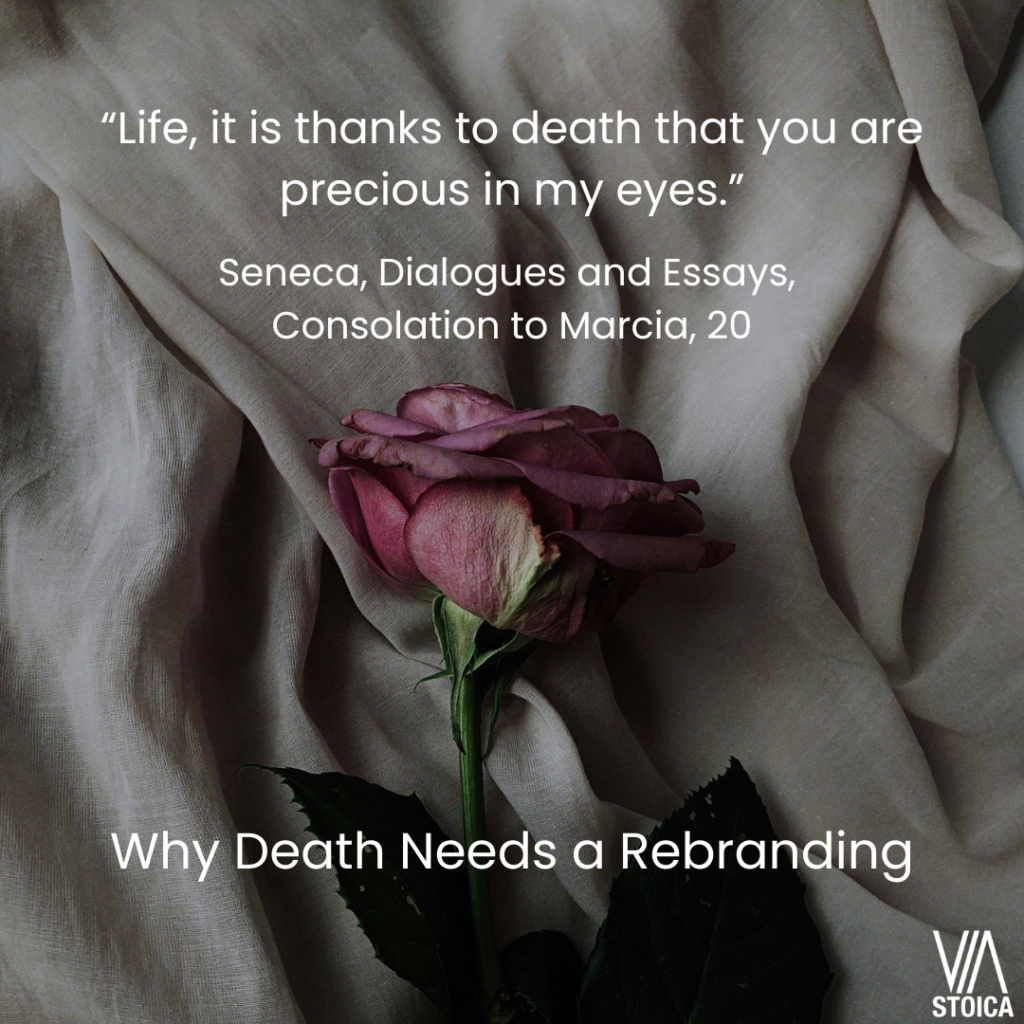
“Life, it is thanks to death that you are precious in my eyes.”
Seneca, Dialogues and Essays, Consolation to Marcia, 20
This is what Seneca is trying to tell us with this wonderful sentence. Take death away from life, and where is the urgency? Imagine being immortal. Think about what it would mean; never to die. Then even doing the right thing would become meaningless. Fulfilling your purpose would be useless. What are you doing it for? For a perpetual existence without direction? Because that is what death does. It gives us direction. We know the cycle of our life; we can see it all around us. When we are young, we can’t wait to be older, and when we are ol,d we would love to slow it all down. Never appreciate either. We need death; life needs it because it gives it its beauty. Yet, some want to walk backward with all their might. Why is that? What lies at the bottom of that?
Busy making plans
Death robs us of time; the clock stops ticking for us. We believe we need more of it to complete our goals and objectives. We work so hard towards them that we can’t process it when life halts us in our place.
“Life is what happens to you while you’re busy making other plans.” John Lennon, Song: Beautiful Boy (Darling Boy), min: 2:19
John Lennon, Song: Beautiful Boy (Darling Boy), min: 2:19
Mr. Lennon knew, and he was stopped at the prime of his existence. He was doing all these good things, yet even to someone like him, death happened. Nature doesn’t discriminate. Therefore, we must be ready for it. And how can we do that? To think and philosophize about it. Seek the truth about what it means to you. Learn to accept it for what it is and let that drive you in your life in the moment. Don’t hide away from it because it will find you.
Dealing with the loss of others
Now that we are learning to accept our own mortality, we must also learn to deal with the death of others. Because let’s face it, there are three options in life in connection with any person you see around you. You either die before them, they die before you, or you die at the same time. We can’t forget these facts and must learn to understand them for what they mean. Letting go is a difficult but necessary task to undertake. Ask yourself, how many people have left your life without them dying? Friends come and go. Those who we thought would be with us forever seem to be whisked away by a breeze. Here again, it is change that we’re dealing with. We change, or they change, to the level that you grow apart. How different is this from death?
Here, we need to address the permanence of death. There is no coming back from it, so those we lose are lost forever. Some are lucky enough to go in peace, while others have to go through a prolonging of some type of existence. Oftentimes done so by the people who are unwilling to let go. We ask our healthcare workers to perform miracles. When a person does die, we are so blinded by grief that we decide to aim it at those who dedicated their lives to helping others. And if a loved one has lost most of their cognitive capabilities and is only physically still among us, is that still the same person we cared for? Is this also how we wish to remember them? Our desire to keep people alive no matter what might be crueler than letting them transition in peace.
Apply philosophy to save death

If we apply philosophy to this question, then we should ask ourselves what it means to be alive. Especially rational beings such as ourselves. Getting the most out of life by following your purpose and nature, discovering who you are, and living the best you can are some of the criteria that can lead to a good life. For some, that means being active and pushing themselves; others find that growth inside as they ponder everything. I can imagine coming to a point where I would say that I’ve lived my life. Either because of a disease or failing mental capabilities that would be irreversible, or because I lived it all. It wouldn’t be my wish to spend my last days ever more distancing myself from who I am.
“Possibilities:
i. To keep on living (you should be used to it by now)
ii. To end it (it was your choice, after all)
iii. To die (having met your obligations)
Those are the only options. Reason for optimism.”
Marcus Aurelius, Meditations, Book 10.22
It is not that I advocate suicide, and if someone is dealing with these thoughts, then they need to contact someone who can help them. Here is a list of numbers for many countries with a suicide hotline. Or contact me if you wish to speak to someone; although I’m not a professional in this area, I can always listen. The problem is that there isn’t enough help for people with mental health issues to assist them in making rational and reasoned decisions regarding their lives. Where we have assisted living facilities, we should also have assisted dying options.
In the Netherlands, there is a first attempt made to facilitate a gracious departure, but there is still a long way to go. Instead of dragging it out, we can turn even death into a beautiful moment. There are many people out there who struggle so much with life that death would be a welcome relief. But it’s taboo to discuss this, making it even worse for them.
Death needs rebranding
That’s why death needs a rebranding. Learn to see that there is even beauty in death and that it brings the same to life. Be grateful for the people around you while they are there. Don’t take them for granted. Respect the life they live, and when it’s their time, let them go. Don’t take your own life for granted either. Make sure you are living it to the fullest, in your own unique way.
If you do have thoughts about leaving it all behind, seek support. Think about what it is that you are willing to give up. That exit is always there and will meet you at one point anyway. This is your one go at life, and why not explore it some more and go after what you want from it? Learn to speak about your problems and worries. This is where we, as a society, have a task to change our view.
We should all be more open to the concept of death. It is not taboo, it is a fact. We shouldn’t keep people alive for the sake of us not wanting to let go. But we shouldn’t let it go too soon either. More than in other situations, we need to have our rational mind prevail and apply reasoning to the situation. By making it open for debate and discussio,n we can reduce the worry people have over it.
Everyone should have agency over their own life. If I should end up in a situation where I have lived my best life and don’t want to take away from that beauty, then I should be able to say my goodbyes. I don’t fear death; I accept and embrace it for what it is. That’s making me live my life even fuller. Let’s rebrand death to life’s dessert. Wouldn’t it be wonderful to say, whenever death meets us, “I’ve lived a wonderful life, and I’m ready for this change. Death, thank you for making my life beautiful.”
Be grateful for life by accepting death
While many readers might disagree with me and say that there are a lot of people who suffer and are hurt. They can’t say that they had a wonderful life and never had the chances I had; I completely agree. But that’s why I’m an advocate for philosophy. We should learn to find our philosophy of life to better deal with these topics and learn more about who we are. To find ways to deal with the suffering and the hurt. If we learn to accept death in our lives, then we can enhance the life we lead. In a previous article, I showed how philosophy can teach us how to die, which you can find here.
Think about what death means to you. Why are you scared of it, if at all? If you seek it, what is so bad about your existence now? But let’s try to make it a topic we can talk about. Only then can we give it its rightful place. As I said before, it is the only part of life we all share, so why not learn from each other and grow as a society? Rebrand death into something beautiful, awaiting us at the end of a fulfilled life.
Want to explore more Stoic Practice?
Book a free consultation with one of our Stoic Coaches to get support. Or read more about How to Practice Stoicism here. Listen to the Via Stoica Podcast on Spotify, Apple Podcasts, or YouTube.
Author Bio
Benny Voncken is the co-founder of Via Stoica, where he helps people apply Stoic philosophy to modern life. He is a Stoic coach, writer, and podcast host of The Via Stoica Podcast. With almost a decade of teaching experience and daily Stoic practice, Benny creates resources, workshops, and reflections that make ancient wisdom practical today.
Related Posts
-
 Via Stoica Podcast
A Stoic Conversation with Jason Nelson: Six Seeds for a Happier Life
What if happiness is not something you achieve one day, but something you practice every day? In A Balm for Your Soul: Six Seeds for Happiness, Jason Nelson offers a grounded and humane answer to a question many people quietly struggle with: Why does life still feel off, even when things look good on paper?Rather […]
Read more -
 Greek Stoic Philosophy Terms
What Is Philanthropia? How Stoicism Views Love for Humankind
What Is Philanthropia? Philanthropia in Stoicism is the cultivated disposition to care for human beings simply because they are human. It describes a rational, practiced goodwill toward others that flows from understanding our shared nature, rather than from emotion, obligation, or reward. This concept matters today because modern life often treats kindness as optional, sentimental, […]
Read more -
 Blog
Blog10 Stoic Quotes on Purpose: A Guide to Living as Yourself
What is Purpose? Purpose is often treated as something to be discovered, achieved, or secured. For the Stoics, it is none of these. Purpose is not a destination, but a way of orienting one’s life, a manner of acting, and a character one steadily forms. The following Stoic quotes trace a clear progression: from understanding […]
Read more
Comments 0