
The Carnac Stones: A Stoic Lesson in Purpose and Simplicity
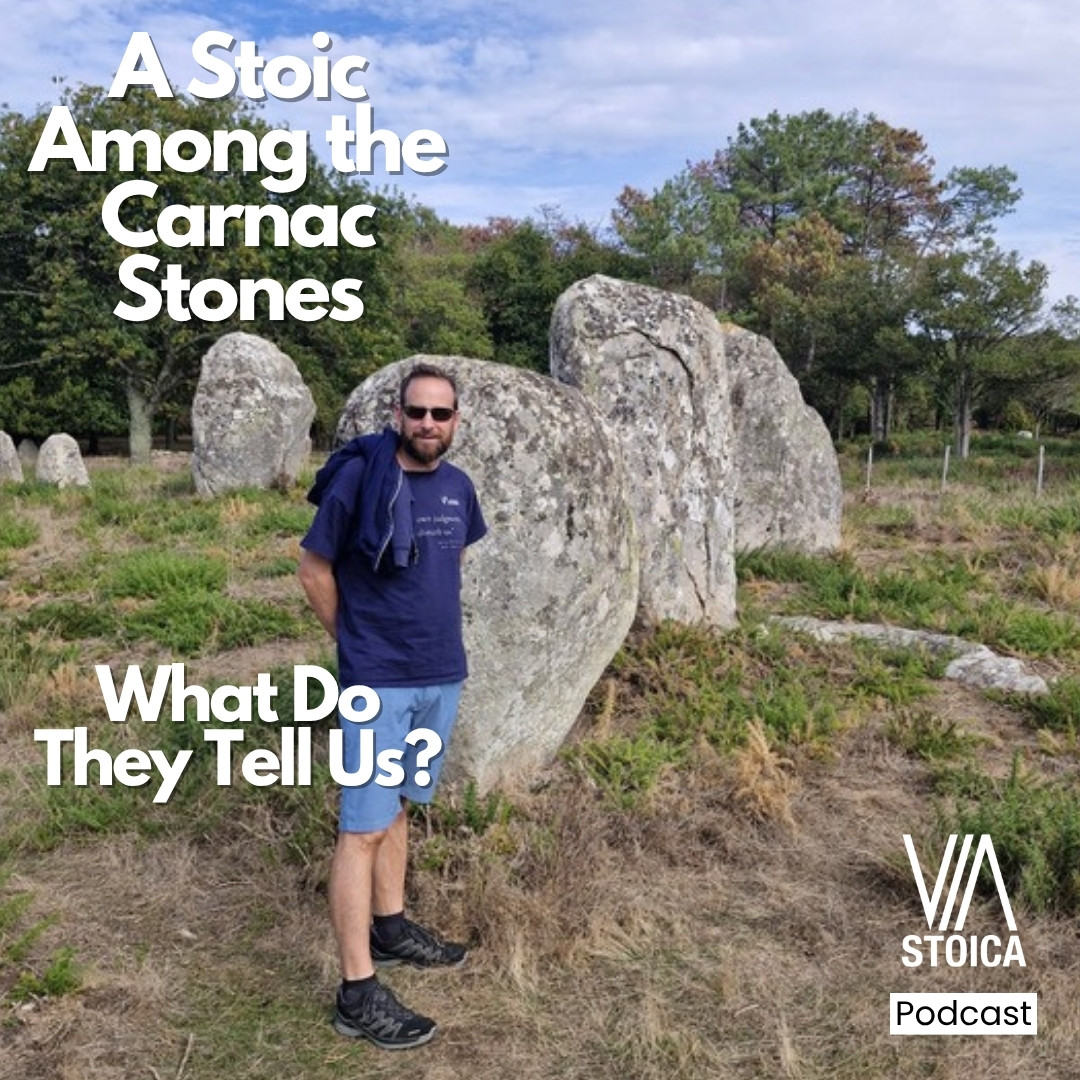
The Carnac stones teach a Stoic lesson about purpose: you do not need anyone to understand why you do what you do, as long as you have good reasons of your own. Neolithic farmers in Brittany raised long rows of these standing stones several thousand years ago, and nobody can say for sure why. Walking among them early in the morning made me think about my own reasons, and about the extra weight we add to our problems.
Here I look at what the stones suggest about purpose, how we pile unnecessary stones onto our own problems, and how you can look inward to find direction.
What Are the Carnac Stones?
The Carnac stones are a vast collection of standing stones near the town of Carnac in Brittany, in the north of France. Neolithic farmers set them up in rows, and the rows stretch across the landscape for a long way. Some of the stones are very tall, and walking between them is a remarkable experience.
Nobody knows why the farmers built them. Suggestions include religious ritual, burial, a barrier or landmark, and even a map of the stars. The people who raised the stones lived in this place all year round and cultivated the land, so the monuments belonged to their daily world.
Purpose Does Not Need an Audience
Because we cannot know why the builders did it, the stones raise a question about our own purpose. Much of the time we do things while the people around us have no idea why we do them.
“A lot of the times we do things and people around us have no idea why we're doing them. But we have our good reasons for them.”
Benny Voncken, Via Stoica Podcast, Between the Stones of Carnac (1:39)
Those good reasons are enough to keep going, especially when your work has real value and helps others. If you want to explore this further, read how to find your purpose through Stoicism.
What Are You Adding to Your Problems?
The size of the stones suggests a second lesson. The builders did not want to lift a stone farther or heavier than they needed to, while we often add much more to our troubles than they require.
“What are you adding to it? What are you putting up on top of the rocks that you have to carry?”
Benny Voncken, Via Stoica Podcast, Between the Stones of Carnac (3:36)
Most of the weight we add comes from our thoughts and from extra things that serve no purpose. When you face a challenge, you can ask what the real core of the issue is and keep it from growing into something larger. The same habit helps when your mind keeps spinning, as you can read in Stoicism for overthinking.
The early farmers were trying to survive, settle the land and build a community. Their monuments look like a huge task, yet they kept their lives as simple as they thought they could.
Closer to Nature Means Closer to Yourself
A friend and I wondered whether the people of Carnac lived closer to nature than we do. I do not believe they necessarily did. They lived by the patterns of the land around them, and we have our own ways of living in nature. What we may have lost is the connection to our own nature, which the Stoics described as living according to nature, as you can read in what physis means.
If you feel lost and your intuition seems far away, you do not have to search for it outside yourself or in the stories other people tell about how they live.
“We just have to go inside. We have to really listen to ourselves and find our nature there.”
Benny Voncken, Via Stoica Podcast, Between the Stones of Carnac (5:25)
Work out what suits you, what you find important, and which values and principles you hold. Our article on what values are is a good place to begin. Once you listen to yourself, you can find a direction and a project you feel passionate about, and only you can figure that out.
How to Apply the Lesson of the Carnac Stones
These steps put the lesson into practice, and you can try them on any ordinary day.
Begin by naming a project or habit whose reason only you fully understand, and ask whether it holds value for you and for others.
Next, look at a challenge you face right now and write the real core of it in one line.
List what you have added to that challenge, such as worries, stories and extra tasks, and set down one stone you do not need to carry.
Sit with your values and principles for a few minutes, and let them point you toward a direction.
Finally, listen to yourself before you look for answers elsewhere.
Frequently Asked Questions About the Carnac Stones
What are the Carnac stones?
The Carnac stones are a vast collection of standing stones in Brittany, in the north of France, set in long rows by Neolithic farmers.
Who built the Carnac stones?
Neolithic farmers raised them several thousand years ago. They lived in the area all year round and cultivated the land.
Why were the Carnac stones built?
Nobody knows. Suggestions include religious ritual, burial, a barrier or landmark, and a map of the stars.
What can the Carnac stones teach a Stoic?
They remind us to hold on to our own reasons for acting, even when others do not understand them, and to stop adding unnecessary weight to our problems.
How can I find my direction in life?
Listen to yourself, work out your values and principles, and choose a project you care about, especially one that benefits others.
A Question to Take With You
Standing among stones whose purpose nobody knows, I asked myself where I spend my energy. You can ask yourself the same: are you focused on the right things, or are you looking for life in a place where you do not have to look? The answer may sit closer to home than you expect.
Watch the full episode on YouTube.
Want to Learn More?
If this resonated, a conversation with Benny as your Stoic coach can be a good place to begin. You can also sign up for the newsletter, The Pause, or follow the Via Stoica Podcast on YouTube, Spotify, or Apple Podcasts.
About the Author
Benny Voncken is the founder of Via Stoica and host of the Via Stoica Podcast. He has practiced Stoicism for over six years, spoken at Stoicon, and led Stoic walks across Europe. Through Stoic coaching, he helps people develop their own philosophy of life. It gives them the tools to face obstacles, navigate change, and find balance. He writes, teaches, and walks wherever the philosophy takes him.


Comments 0