
Mont Saint-Michel: A Stoic Lesson in Living With Nature
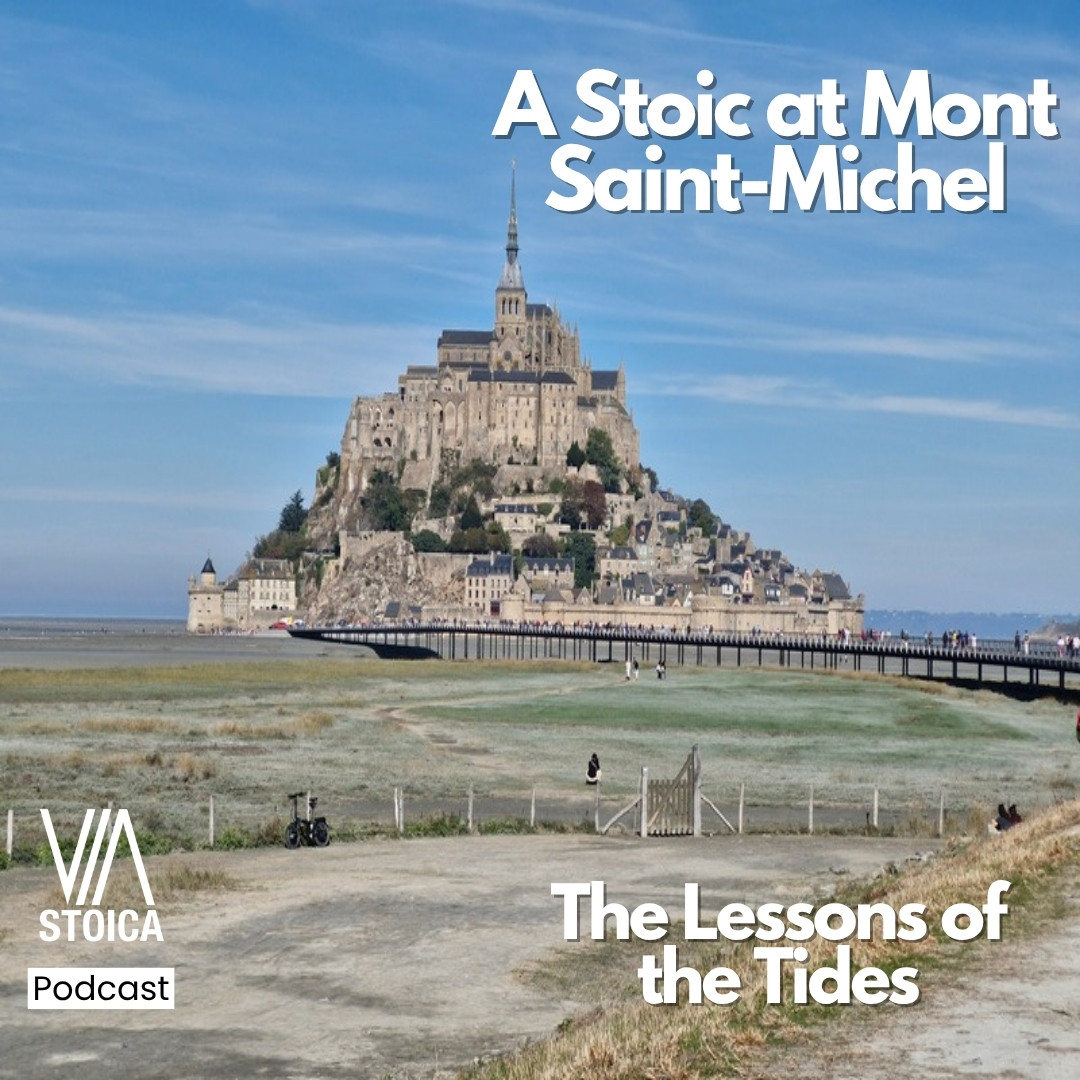
Mont Saint-Michel teaches a Stoic lesson about living with nature instead of against it, because life gets simpler once we stop forcing the world to fit our wishes. The abbey sits on a small island off the French coast, where the sea rises and falls with some of the strongest tides in Europe. Standing on the causeway with the water creeping in behind me, I thought about how often we try to bend the world to our desires. Life gets much easier when we learn to live with it instead.
Here I look at what happened when people tried to outsmart the tides and what the Stoics meant by living in accordance with nature. I also share how a modest and simple life helps you enjoy the world around you.
What Is Mont Saint-Michel?
Mont Saint-Michel is a medieval abbey built on a rocky island off the coast of Normandy, in the north of France. At high tide the sea surrounds it. At low tide the water pulls back so far that the island stands in a wide bay of sand and mud. The difference between the two is one of the biggest tidal changes in Europe. On the heaviest tides the path to the island closes completely.
For centuries, pilgrims had to wait for the tide to go out before they could cross from the mainland. The monks who built the abbey chose a place that nature made almost uninhabitable. The sea has set the rhythm of life there ever since.
When People Tried to Change the Tides
At some point, people grew tired of waiting for the tides, so they built a solid causeway across the bay. Visitors could now walk and drive to the island whenever they liked. The sea, however, no longer flowed freely around the rock. The bay behind the causeway slowly silted up because the tides could no longer wash it clean.
“So man tried to change the tides, change nature, but at the end of the day, nature has its reasons.”
Benny Voncken, Via Stoica Podcast, Mont Saint Michel (1:03)
Undoing that mistake took years of work and a great deal of money. The old causeway came down, and a light bridge on stilts replaced it so the water could move around the island again. The bay could recover its natural order. The lesson sits in plain sight. When we listen a little more to what happens around us, and stop reshaping everything to our own desires, we do a lot better than when we fight it.
Living in Accordance With Nature
The story of the causeway is a small version of what Stoic philosophy asks of us. The Stoics summed up the good life as living in accordance with nature, and they meant two things by it. We live according to our own nature, as rational and social beings. We also live with the world around us as it is, rather than as we wish it were. You can read more about the Greek word behind this idea in what physis means.
“We have to live with nature, in accordance to nature, according to who we are, ourselves, but also with the world around us.”
Benny Voncken, Via Stoica Podcast, Mont Saint Michel (1:44)
Mont Saint-Michel shows this at its best, because nature always comes back. The tides rise whatever we build, and on the heaviest ones the island simply closes to visitors. Nobody argues with the sea. We accept it, plan around it, and return another day. If we treated more of life that way, we would spend far less energy on things we cannot change. That idea sits at the heart of what is really in your control.
Where We Choose to Live
Living with nature also includes the choices we make about where we settle and how much we take. Many of the disasters in the news come partly from our wish to live where nature does not always agree with us. Coastlines erode, and when we build on hillsides, heavy rainfall washes everything away. The abbey on its rock is a wonderful example of people building in an uninhabitable spot. It still stands because the monks learned to live with the sea instead of against it.
None of this means we should stop building or exploring. It means we should ask what we want to use, how much of it we need, and whether the place we choose will let us live in harmony. Those are questions about our own nature as much as about the landscape. Our article on how to find our nature goes deeper into them.
A Modest and Simple Life
For now, we are here, and we have to make the best of it. That is what I try to do as well. I try to live a modest, simple life, and in the meantime I enjoy the world around me as much as I can. Travelling to places like this shows me how people everywhere live ordinary lives. It also shows how the nature of each place lets them do so.
“The more I see, the more I experience, the more I feel like we can really live a good life.”
Benny Voncken, Via Stoica Podcast, Mont Saint Michel (3:20)
Most people are already living that good life, at least in part. We only need to dial it back a little and make things as simple and easy as possible. If you want to train that habit on purpose, Stoic voluntary discomfort is a good place to start. It teaches you how little you need to feel content.
How to Apply the Lesson of Mont Saint-Michel
You do not need a tidal island to practice this, and the steps below fit into any ordinary week.
Begin by naming one thing in your life you keep trying to force, such as a person, a schedule or an outcome. Ask whether it is your causeway.
Watch what happens around you for a day before you try to change any of it. Notice which rhythms you have been fighting.
Then look at what you use and own, and pick one thing to dial back without losing anything you value.
Spend a few minutes outside, in whatever nature is near you, and enjoy it without trying to improve it.
Finally, when the tide comes in on your plans, accept it, wait, and come back another day.
Frequently Asked Questions About Mont Saint-Michel
What is Mont Saint-Michel?
Mont Saint-Michel is a medieval abbey on a rocky tidal island off the coast of Normandy, in the north of France.
Why are the tides at Mont Saint-Michel famous?
The bay has one of the biggest tidal ranges in Europe. At high tide the sea surrounds the island, and on the heaviest tides the path from the mainland closes.
What happened to the causeway at Mont Saint-Michel?
A solid causeway stopped the tides from flowing around the island, so the bay silted up. It took years of work to replace it with a bridge that lets the water move freely again.
What does living in accordance with nature mean in Stoicism?
It means living according to your own nature as a rational and social being, and living with the world as it is rather than as you wish it were.
What can Mont Saint-Michel teach a Stoic?
It shows that nature always comes back and that fighting it costs more than listening to it. A modest and simple life lets you enjoy the world around you.
A Thought to Take With You
Standing in front of the abbey while the tide crept back in, I saw how much effort it took to undo one attempt to outsmart the sea. Most of us carry a causeway or two of our own, built to avoid waiting on something we cannot command. Life gets a little easier and a little better once we let the water flow.
Watch the full episode on YouTube.
Want to Learn More?
If this resonated, a conversation with Benny as your Stoic coach can be a good place to begin. You can also sign up for the newsletter, The Pause, or follow the Via Stoica Podcast on YouTube, Spotify, or Apple Podcasts.
About the Author
Benny Voncken is the founder of Via Stoica and host of the Via Stoica Podcast. He has practiced Stoicism for over six years, spoken at Stoicon, and led Stoic walks across Europe. Through Stoic coaching, he helps people develop their own philosophy of life. It gives them the tools to face obstacles, navigate change, and find balance. He writes, teaches, and walks wherever the philosophy takes him.
Related Posts
-

-
Musonius Rufus Lectures
Musonius Rufus Lecture 1: How to Teach Like a Stoic
Musonius Rufus Lecture 1 explains how to teach like a Stoic: a few convincing proofs, a student who tests them, and a teacher who lives them.
Read more -


Comments 0