
Who Was Michel de Montaigne: Philosopher, Essayist, and Stoic Thinker
Who was Michel de Montaigne? This is a short introduction into my idea of who Michel de Montaigne was and how he lived.
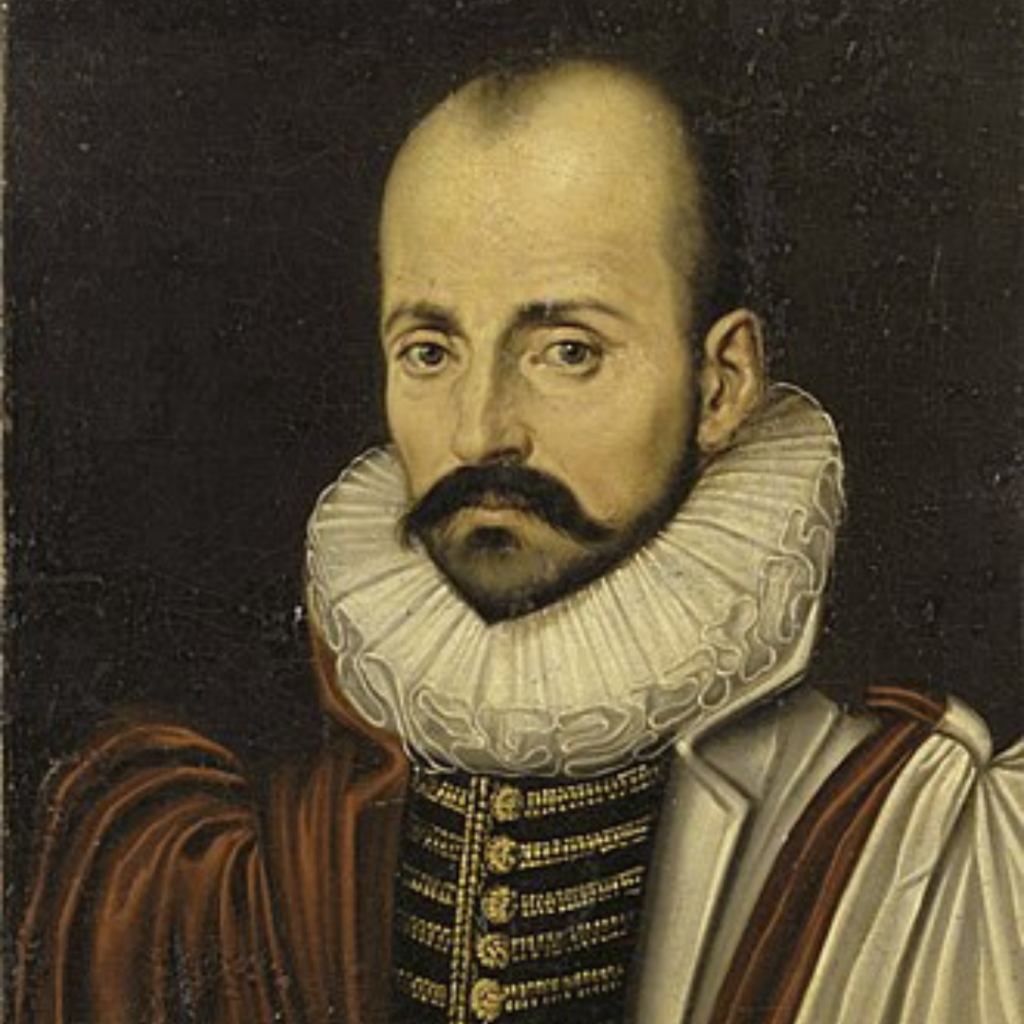
Thinker: Michel de Montaigne | Lived: 1533 to 1592 | Born: Périgord, France | Status: Renaissance essayist and statesman, not a Stoic himself but deeply Stoic-shaped | Known For: The Essays, inventing the essay as a literary form
Michel de Montaigne (1533 to 1592) was a French Renaissance philosopher, writer, and statesman who invented a new form of writing and, in doing so, invented a new way of thinking about the self. He called it the essai, from the French verb essayer, to try or to test. His three books of Essays are not arguments or treatises. They are a man examining himself honestly, in public, over the course of a lifetime. No philosopher before him had done quite that.
He was born into a noble family in the Périgord region of southwest France, lived through the brutal religious wars that divided his country, served twice as mayor of Bordeaux, and spent the later years of his life in a tower on his family estate, reading, thinking, and writing. He was deeply shaped by the ancient Stoics, particularly Seneca, and his Essays return again and again to the same questions Stoicism asks: how do we live well, how do we face death, and what is actually within our power?
Was Michel de Montaigne a Stoic?
This is the question his readers keep returning to, and it deserves a careful answer.
Montaigne was not a Stoic in the strict sense. He did not follow a single school and was openly suspicious of philosophical dogma in any form. His motto, Que sais-je?, What do I know? captures his fundamental disposition: skeptical, provisional, always questioning, including questioning himself. He would have resisted the label.
And yet his Essays are saturated with Stoic thinking. He read Seneca more than any other author, quoting him hundreds of times across the three books. The themes that run through his work, the dichotomy of control, the practice of preparing for death, the examination of impressions, and the cultivation of inner freedom, are Stoic themes. He absorbed them so thoroughly that they became the texture of his thought rather than a set of positions he held.
What makes Montaigne interesting from a Stoic perspective is precisely where he departs from the tradition. He was less interested in the Stoic ideal of the wise man and more interested in the ordinary person trying to live reasonably well. Besides, he found the Stoic sages too remote, too perfect, too far from the mess of actual human experience. He wanted a philosophy that could sit with uncertainty, that allowed for weakness and contradiction, that did not demand the impossible. In that sense, he pushed Stoicism toward something more honest and more human.
So: not a Stoic, but perhaps one of the most Stoically shaped thinkers who ever lived outside the tradition itself.
Early Life and Education
Montaigne’s father, Pierre Eyquem de Montaigne, had an unusual vision for his son’s education. He arranged for the boy to be raised speaking Latin as his first language. Everyone in the household was instructed to address the young Michel only in Latin, so that he grew up speaking it more naturally than French. It was an extraordinary gift, and it gave him direct access to the ancient texts that would shape his entire intellectual life.
He studied law, served in the Bordeaux parliament, and moved in the political circles of his time. But the event that marked him most deeply in his early life was the death of his closest friend, Étienne de La Boétie, in 1563. They had known each other for only a few years, but the friendship was of a kind Montaigne never found again. When asked later why the two had been so close, he gave an answer that has been quoted ever since:
"Because it was he, because it was I."
Michel de Montaigne, Essays, Book 1, Chapter 28
La Boétie died of plague at thirty-two. Montaigne was thirty years old.
The Tower and the Essays

In 1571, at the age of thirty-eight, Montaigne retired from public life and withdrew to a round tower on his family estate. He had an inscription carved into the library ceiling, in his own words, that he was retiring from the court and public duties to spend the rest of his days in freedom, tranquility, and leisure. He intended to spend his time reading and thinking.
What came out of that tower was the Essays. First published in 1580, expanded through two further editions, and left unfinished at his death in 1592, they are one of the strangest and most intimate works in the history of philosophy. Montaigne writes about everything: friendship, cannibals, the education of children, how he rides a horse, what it feels like to be thrown from one, the nature of experience, the art of conversation, and how to learn to die. He uses each subject as an occasion to examine himself, which is the move that makes the Essays unlike anything before them.
By examining himself honestly, he believed he was examining something universal. And he was explicit about his subject:
"Each man bears the entire form of a man's estate."
Michel de Montaigne, Essays, Book 3, Chapter 2
Montaigne’s Philosophy
Montaigne does not present a system. That is deliberate. He distrusted systems the way he distrusted dogma: as things that flatten the complexity of actual experience. What he offers instead is a practice of attention, of looking carefully at how we actually think and feel and behave, and being honest about what we find.
Several themes run throughout the Essays that place him in close conversation with Stoic philosophy.
Self-examination as a way of life.
The Essays are an extended act of attention to the self. Montaigne examines his impressions, his habits, his fears, and his contradictions with the same commitment the Stoics brought to the discipline of assent. He simply does it in a more personal and less systematic way.
The preparation for death.
One of his earliest and most famous essays, “That to Philosophise is to Learn to Die,” draws directly from Seneca and the Stoic tradition. He argues that philosophy’s central task is what the Stoics called memento mori, making us at home with our own mortality rather than avoiding it. You can read a full reflection on this in the Via Stoica piece on learning how to die.
The limits of what we control.
Montaigne returns repeatedly to the gap between what we can determine and what we cannot, and to the importance of not tying our peace of mind to things that lie outside our power. This is Stoic territory, approached in his own way.
The relativity of judgment.
His account of the people of the New World is a striking example of his method. Where his contemporaries called them savages, Montaigne turned the question around: by what standard are we the civilised ones? He was interested in examining the assumptions behind our judgments rather than accepting them as given. This is not identical to Stoic logic, but it is built on the same commitment to examining impressions before assenting to them.
Friendship, Loss, and the Human Condition

The Essays return often to La Boétie. The loss of his friend never fully left Montaigne, and the depth of that friendship became one of the essay collection’s central subjects. For Montaigne, this kind of friendship, what Aristotle called a friendship of virtue, was rare and irreplaceable. He had other friendships, other relationships, a wife and a daughter who survived childhood while his other children did not. But the friendship with La Boétie remained the measure by which he understood what human connection could be.
This personal dimension is what separates Montaigne from most philosophers. He is not writing from a position of mastery or resolution. He is writing from inside a life, with all its loss and inconsistency and uncertainty intact. That is why readers across four centuries have found him so recognisable.
Why Montaigne Still Matters
Montaigne brought philosophy back to the ordinary person. Not as a simplified version of something more rigorous, but as a genuine practice of paying attention to your own experience and being honest about what you find. That is harder than it sounds, and he knew it. His Essays are full of the ways we deceive ourselves, distract ourselves, and avoid the questions that most need asking.
What makes him particularly useful alongside Stoicism is that he offers a corrective to the tradition’s more demanding tendencies. Stoicism at its most rigorous can feel remote from actual life, a set of standards no real person consistently meets. Montaigne accepted that gap without apology. He was interested in what philosophy could do for someone who was not a sage, who was inconsistent and forgetful and sometimes afraid. That is most of us.
His Essays remain among the most honest books ever written. Not because they contain difficult truths, but because they model the act of looking honestly at a life in progress. For anyone drawn to Stoicism not as a system to master but as a support for living, Montaigne is essential reading. Pick up any edition of the Essays and open to any page. You will find yourself there.
If you wish to learn more about Michel de Montaigne, his life, and his essays, visit HyperEssays. Continue reading about other Stoic philosophers: Marcus Aurelius, Epictetus, and Seneca. For his most memorable writing, visit the Michel de Montaigne Quotes page.
Frequently Asked Questions
Who was Michel de Montaigne?
Michel de Montaigne (1533 to 1592) was a French Renaissance philosopher and writer who invented the essay as a literary and philosophical form. He is best known for his three books of Essays, in which he examines himself, his experience, and the human condition with unusual honesty and depth.
Was Montaigne a Stoic?
Not strictly. Montaigne resisted philosophical labels and was skeptical of dogma in any form. But his Essays are deeply shaped by Stoic thought, particularly by Seneca, whom he read more than any other author. The themes of self-examination, preparation for death, and the limits of control that run through his work are all Stoic themes. He is best understood as a Stoic-adjacent thinker who absorbed the tradition and then pushed it toward something more personal and less systematic.
What are the Essays by Michel de Montaigne?
The Essays are three books of writing published between 1580 and 1588, with additions made until Montaigne’s death in 1592. They are not arguments or treatises but a sustained act of self-examination. Montaigne uses a wide range of subjects as occasions to look at himself honestly. They are considered the founding work of the essay as a literary form and one of the most intimate works in the history of philosophy.
What did Montaigne believe?
That self-examination is the foundation of a good life. That we should hold our judgments provisionally and examine our assumptions carefully. That philosophy is not a body of knowledge to acquire but a practice of attention to bring to everyday experience. And that death, understood clearly, is not something to fear but something to make peace with.
Want to Explore More Stoic Practices?
Book a Stoic Coaching free consultation with Benny to explore how Stoicism can support you. Or read more about How to Practice Stoicism here. Listen to the Via Stoica Podcast on Spotify, Apple Podcasts, or YouTube.
Author Bio
Benny Voncken is the founder of Via Stoica, where he helps people apply Stoic philosophy to modern life. He is a Stoic coach, writer, and podcast host of The Via Stoica Podcast. With almost a decade of teaching experience and daily Stoic practice, Benny creates resources, workshops, and reflections that make ancient wisdom practical today.


Comments 0