
Why We Need a Philosophy of Life to Be Free
Philosophy can help us deal with life because it can be difficult. Let me rephrase that, life is difficult. We all have our issues. Although I don’t have any factual proof, I’m quite sure that a majority of people have problems and struggles. If life is so difficult, how can we navigate these troubled waters?
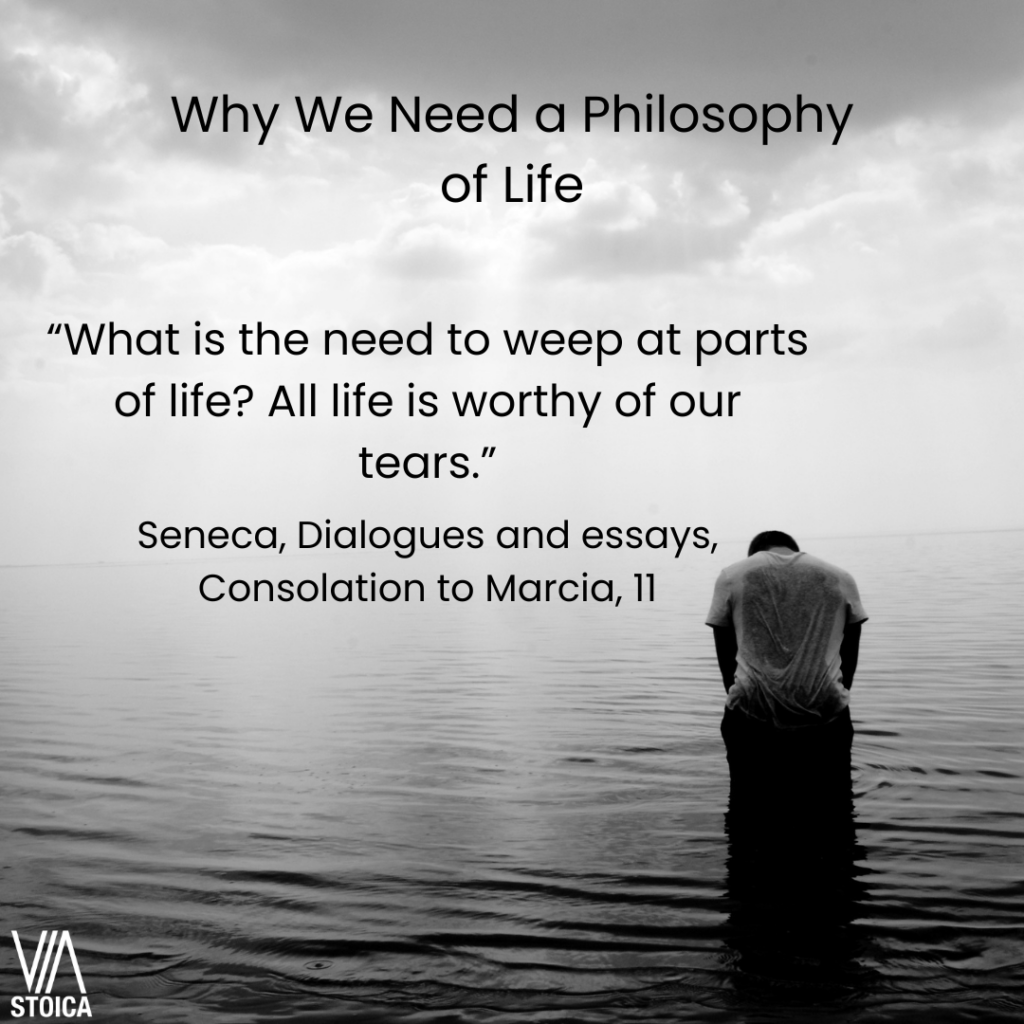
A philosophy of life is what keeps you steady when things fall apart, gives you direction when you feel lost, and frees you from carrying every difficult moment as a personal grievance. This isn’t a piece to turn you into a Stoic. It’s meant to inspire you toward finding your own philosophy of life, whether that ends up being Stoicism, something else entirely, or some mix that fits you best. Starting the search is the part that actually matters.
Life is difficult, that much is certain. We all face struggles, doubts, and moments when we feel lost, and that’s why a philosophy of life matters. It gives us direction when things fall apart, inner strength when we feel weak, and a clearer head when the world seems confusing. A philosophy of life is a compass for steering through the storms of existence, not an abstract or academic exercise.
Seneca understood this long ago when he wrote:
"What is the need to weep at parts of life? All life is worthy of our tears: fresh problems will press upon you before you have done with the old ones."
Seneca, Consolation to Marcia, 11
Philosophy helps us face what is difficult and make sense of it. Here I want to share what philosophy means to me, why I think we all need one, and how you can start building your own. There’s a practice at the end you can use to get started.
When Life Gives You a Nudge or a Slap

My own journey began a few years ago, during a stretch where I felt completely lost. I didn’t know what to do or where to go. In that kind of confusion, the mind gets vulnerable, open to whatever reaches it first, and not all of those influences point somewhere good. Sometimes it takes a small nudge from fortune, or a slap in the face, to wake you up.
Check out our Stoic Reading List for Beginners: Aurelius to Robertson
For me, that wake-up came through books. A close friend introduced me to reading seriously for the first time. I hadn’t been much of a reader before that, but the right titles at the right moment changed everything. They opened up new ways of thinking and showed me that other people had wrestled with the exact questions I was asking. Realizing that made all the difference.
Discovering Stoicism
The book that actually started this for me wasn’t a Stoic book at all. It was Robert G. Olson’s An Introduction to Existentialism, and buried inside it was a chapter on the Stoics that read like someone had transcribed my own thinking back to me. It made sense instantly, and it did something else too: it told me my own view of life wasn’t strange or invented on the spot. People had been living this way for over two thousand years.
From there, Stoicism itself stood out immediately once I started reading further into it. It was direct, practical, and built on common sense. The Stoics spoke in a language I understood: simple, honest, focused on taking responsibility rather than assigning blame elsewhere. Books, long conversations, and even YouTube lectures showed me how philosophy could be lived, not just studied. Over time, it stopped being something I was learning about and became something I was actually practicing.
Putting It Into Practice
What actually showed me this was a practical philosophy, not just something to read for its own sake, happened later, at work. I was dealing with a colleague I found genuinely difficult, and one line from the Meditations reframed the whole situation for me.
"That sort of person is bound to do that. You might as well resent a fig tree for secreting juice. (Anyway, before very long you'll both be dead – dead and soon forgotten.)"
Marcus Aurelius, Meditations, Book 4.6
It was up to me to learn how to work with him as he actually was, not to change him, get angry, or expect him to suddenly become someone else. That single line did more to show me these texts have real, practical application than anything I’d read about Stoicism in the abstract, but only if you actually practice them. Not read for vanity, and not just quoted at a difficult moment and then forgotten. Used.
Freedom Begins in the Mind
The Stoics remind us that true freedom is found within, not in possessions, money, or status. As Seneca told Lucilius:
"How can you wonder your travels do you no good, when you carry yourself around with you? You are saddled with the very thing that drove you away."
Seneca, Letters From a Stoic, Letter XXVIII

A change of mind is what brings peace, not travel or a change of scenery. I’ve spent years living and working abroad, often moving on right when things started feeling too comfortable. Stoicism eventually showed me it doesn’t matter where I am. What matters is how I live and what I actually value. Freedom isn’t about escape. It’s about how you choose to respond.
Finding Your Own Philosophy of Life
Stoicism feels natural to me because it lines up with how I already see the world. Not everyone will connect with the same philosophy, and that’s fine. The important part is finding one that actually speaks to you.
Finding your philosophy of life is personal work. It takes honesty, curiosity, and time, and you’ll know it when it feels right if you read widely, reflect on what you read, and question your own assumptions along the way. It won’t solve everything, but it will give you direction and the strength to keep moving with purpose. One honest reminder: this isn’t an easy or comfortable journey, but the rewards last, and they come with real peace of mind.
Stoic Practice: Defining Your Philosophy of Life
- Reflect daily: ask yourself what guided your decisions today, impulse or principle?
- List your values: write down what actually matters to you, then check whether your actions line up with those values.
- Study the wise: read and listen to the people whose ideas genuinely resonate with you.
- Simplify: let go of whatever doesn’t serve your peace or growth.
- Live it: philosophy is practice. Apply one small insight every day.

Philosophy is about learning how to live, not about abstract theories. The Stoics taught that freedom and peace begin in the mind, and once you see that clearly, life gets lighter and more meaningful. Finding your philosophy of life isn’t an endpoint, it’s an ongoing practice. Begin where you are, and let the journey itself shape you.
Frequently Asked Questions
Why do we need a philosophy of life?
Without one, we drift. A philosophy of life gives structure and meaning, especially when things get difficult, and it turns vague struggle into something you can actually work with.
Can my philosophy change over time?
Yes. As you grow, your understanding changes with you. A good philosophy adapts while keeping its core values intact.
Why Stoicism?
Stoicism offers a practical path to living well, built around virtue, control, and inner freedom. It teaches resilience without denial, and compassion without weakness.
Do I need to read ancient texts?
Not necessarily. Start with what’s accessible: podcasts, modern interpretations, or reflections. Applying the lessons is what counts, not mastering the original language.
How do I know if a philosophy of life is actually working?
It shows up in specific moments, not in how well you can quote a text. If a single line changes how you actually handle a difficult person or a hard day, the way Marcus Aurelius’s fig tree line changed how one person here dealt with a difficult colleague, that’s the philosophy doing real work rather than sitting on a shelf.
Want to Explore More Stoic Practice?
The Pause is a monthly letter on Stoic practice. One idea, one exercise, one reflection from the ancient sources, delivered to your inbox each month.
About the Author
Benny Voncken is the founder of Via Stoica and host of The Via Stoica Podcast. He has practiced Stoicism as a way of life for over seven years and draws on almost 15 years of teaching experience to turn dense ancient ideas into daily practice. Since 2023 he has coached clients around the world through one-on-one Stoic coaching. He also leads Stoic walks across Europe, writes the monthly newsletter The Pause, and has spoken at Stoicon.


The Pause
A monthly Stoic newsletter
Sign up and get The Pause Framework free.
A practical Stoic tool for moments of tension. Observe what is happening. Reset your momentum. Decide with reason.
It arrives in your welcome email.
Then, once a month: one reflection, one practice, one Stoic idea.
Comments 0